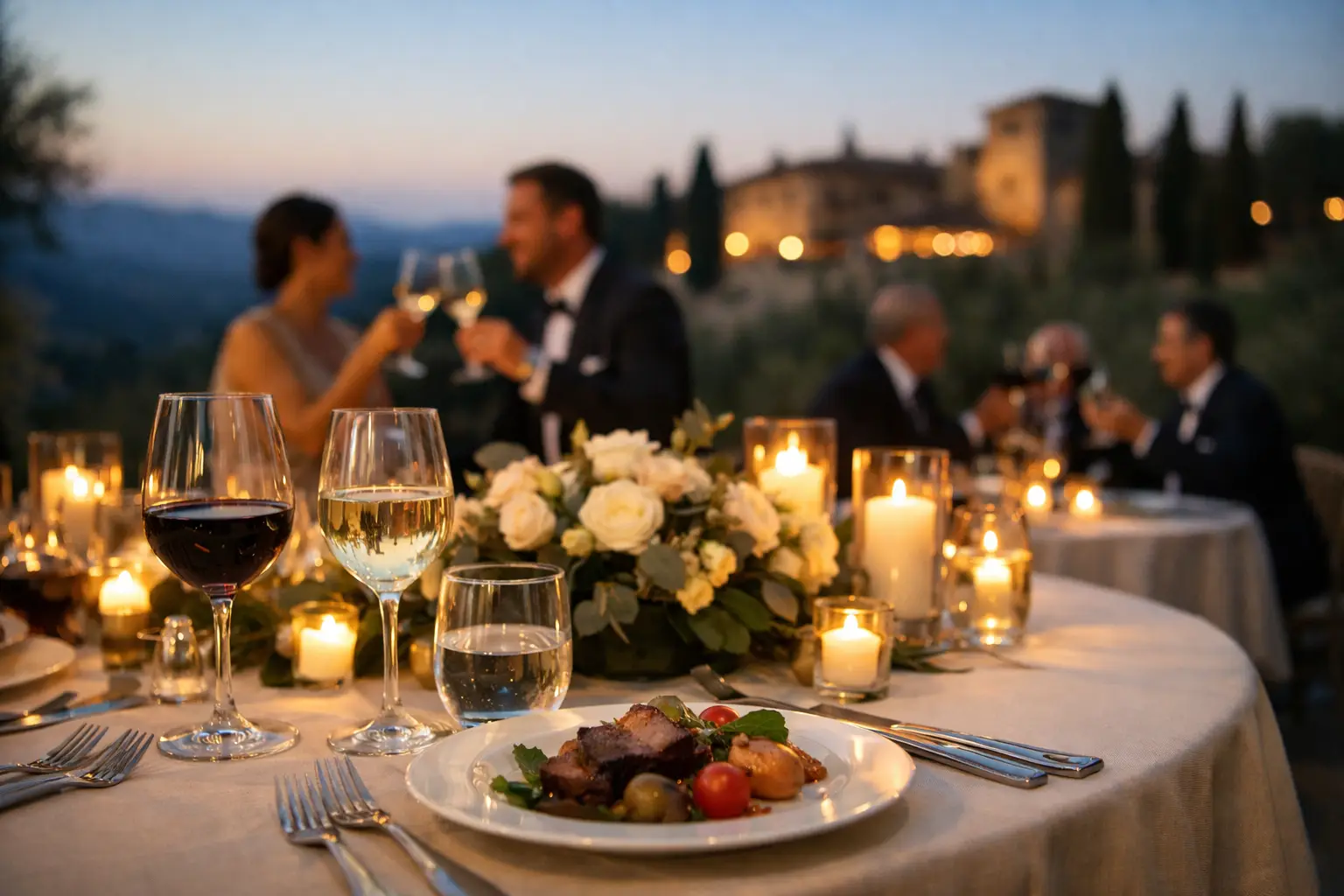
A gala dinner in Italy can place guests beneath Renaissance frescoes, beside a Roman ruin, or in a private Venetian palazzo. That promise is compelling, but it also raises the operational standard. For teams searching how to plan gala dinners italy, the real task is not simply finding a beautiful room. It is aligning heritage, hospitality, production, transport, and timing into one controlled guest experience.
For an international corporate audience, every detail is visible: the arrival sequence, the pace of service, the acoustics during leadership remarks, and the ease with which 300 guests reach the hotel afterward. Italy rewards ambition, provided the planning is grounded in local realities from the first brief.
Start With the Event Objective, Not the Venue
Italy offers extraordinary gala settings, and that abundance can make venue selection deceptively difficult. A former convent may be perfect for an executive celebration of 80, while an industrial space in Milan may better serve a product launch requiring stage builds, projection surfaces, and late-night entertainment. The visual story must support the business purpose.
Define what the dinner needs to achieve before shortlisting locations. Is it a recognition moment after a congress? A client-hosting occasion designed for conversation? The closing celebration of an incentive program? Or a high-energy awards dinner that requires a full production schedule? These answers determine capacity, seating format, AV requirements, entertainment, menu style, and the acceptable level of transfer complexity.
A clear brief should establish guest count, date window, destination, budget parameters, arrival point, dietary profile, brand requirements, and the desired atmosphere. It should also identify non-negotiables. For example, a CEO speech may require unrestricted sound checks and reliable sightlines. A luxury automotive group may need vehicle access. A global audience may need bilingual hosts, accessible routes, and carefully timed transportation waves.
How to Plan Gala Dinners in Italy Around Venue Reality
The most memorable Italian venues are often protected heritage properties. Their character is exactly what clients value, but it can bring limitations that a contemporary ballroom does not. Load-in windows may be narrow. Open flames may be prohibited. Noise restrictions can dictate when music must end. Historic flooring can limit stage weight, while staircases and courtyards can shape guest circulation.
This does not make heritage venues difficult by default. It means the technical and operational assessment should happen before the creative concept is approved. A venue visit should examine kitchen capacity, restroom count, power availability, emergency exits, rain contingency, truck access, green rooms, branding permissions, and the path from coach drop-off to reception.
Capacity requires equal care. A room that seats 300 for dinner may not comfortably accommodate a reception, a stage, a dance floor, buffet stations, and sponsor activations. Ask for layouts based on the actual program, not only the venue’s maximum occupancy. The difference between legal capacity and a polished guest experience is often significant.
Destination also changes the equation. Rome offers monumental settings and strong international access, but urban traffic requires disciplined routing. Florence delivers intimacy and artistic distinction, although city-center access can be constrained. Venice is unmatched for arrival drama, yet water logistics, tides, and boat timing need precise management. Milan suits contemporary brand experiences and large-scale production, with efficient connections and a more modern venue mix.
Design the Guest Journey From Airport to Final Transfer
A gala dinner starts long before the first glass is poured. For out-of-town delegates, the experience begins with the transfer from the conference venue or hotel. Poorly managed arrival logistics can reduce even the most striking venue to a frustrating memory.
Build the evening around realistic movement times rather than optimistic map estimates. In Italy, coach access, pedestrian zones, security controls, local events, and evening traffic can materially affect routing. If guests are traveling in formalwear, a long walk across uneven historic streets or a delayed transfer is not a minor inconvenience.
The strongest plans use a clearly sequenced arrival operation: guest communications before departure, marshals at pickup points, transport manifests, staggered coach releases where needed, and a defined welcome point at the venue. For VIPs, speakers, and guests with mobility requirements, separate access plans are often appropriate.
Departure deserves the same rigor. Guests do not leave a gala dinner at once. Some move directly to coaches, others collect coats, and others remain for entertainment. A phased transportation plan prevents crowding at exits and avoids long waits outside. In destinations such as Venice, boat schedules and dock capacity must be planned with particular care.
Build an Italian Menu That Serves the Program
Italian food is one of the gala dinner’s greatest assets, but authenticity should not be confused with excess. A long, multi-course dinner can be delightful for an incentive group with a relaxed evening. It may be the wrong choice for a corporate awards program with speeches, entertainment, and a fixed transport curfew.
Menu design should follow the run of show. If leadership remarks are central, avoid service changes during key messages. If the event opens with networking, use reception food that is elegant but practical to eat while standing. If guests come from multiple markets, offer regional Italian cuisine with clear dietary alternatives rather than relying on unfamiliar dishes without explanation.
A successful menu can be deeply local while remaining inclusive. Seasonal ingredients, a regional pasta course, and wines chosen with purpose create a sense of place. At the same time, planners should collect dietary requirements early, confirm allergen protocols with the caterer, and ensure vegetarian, vegan, halal-friendly, gluten-free, and alcohol-free choices receive the same level of presentation as the main menu.
Service style affects atmosphere and timing. Plated service creates formality and control. Family-style dining can encourage conversation but requires more table space and coordination. Live culinary stations add theater, although they increase staffing, power, ventilation, and guest-flow needs. The right choice depends on the group and the program, not on a generic idea of Italian dining.
Treat Production as Part of Hospitality
At a gala dinner, production should support the setting rather than compete with it. Lighting can reveal a vaulted ceiling, frame an ancient courtyard, or transform a contemporary space in the client’s brand colors. It can also create problems if it overlooks sightlines, camera needs, or the venue’s restrictions.
Technical planning should begin with the program. Confirm the stage position, speaker sightlines, screen size, sound coverage, interpretation needs, confidence monitors, lecterns, and award presentation routes. In a historic hall, columns and architectural features may require alternative screen placement or additional displays. In an outdoor setting, weather protection and backup power are essential.
Entertainment needs similar discipline. A string quartet can elevate an arrival reception in a palace, while a live band may be better after dinner in a converted warehouse or private estate. The decision should account for sound restrictions, set-up requirements, guest demographics, and the transition from formal program to celebration. A talented act in the wrong operational setting is still the wrong choice.
Protect the Budget With Early Decisions
Italian gala dinners can have a wide cost range, especially when venue exclusivity, heritage access, production, transport, and premium catering are involved. The most common budget pressure comes from decisions made late: adding a larger stage, changing a room layout, extending venue hours, or realizing that the original transport plan cannot handle guest volume.
Create a budget that separates venue, catering, beverage, staffing, production, entertainment, transport, permits, décor, security, and contingency. This makes trade-offs visible. A prestigious venue may justify simpler décor because the architecture already carries the visual impact. Conversely, a more neutral venue can free budget for a major show, immersive branding, or elevated table design.
Local supplier management matters here. Timely confirmations, detailed scopes, and one accountable operational lead reduce surprises and protect the client from fragmented communication. Love IT DMC approaches gala delivery as one integrated operation, ensuring that venue teams, caterers, technical suppliers, transport providers, and hosts are working to the same final run of show.
Rehearse the Moments Guests Will Remember
The evening’s most important moments are often brief: the first view of the venue, a welcome from senior leadership, an awards walk to the stage, or the final departure. Rehearse these moments with the actual people who will deliver them. Test music cues, microphone handovers, walk-on routes, video playback, lighting states, and timing between courses.
A detailed run of show should include more than speeches and entertainment. It should cover vendor arrivals, security checks, table releases, meal service, guest redirection, rain decisions, VIP movement, and transport departures. The document is not bureaucracy. It is what allows a complex Italian evening to feel relaxed to every guest in the room.
The finest gala dinners in Italy never feel overmanaged. Guests simply experience the grandeur of the setting, the warmth of the welcome, and the confidence that every next moment has been anticipated.

