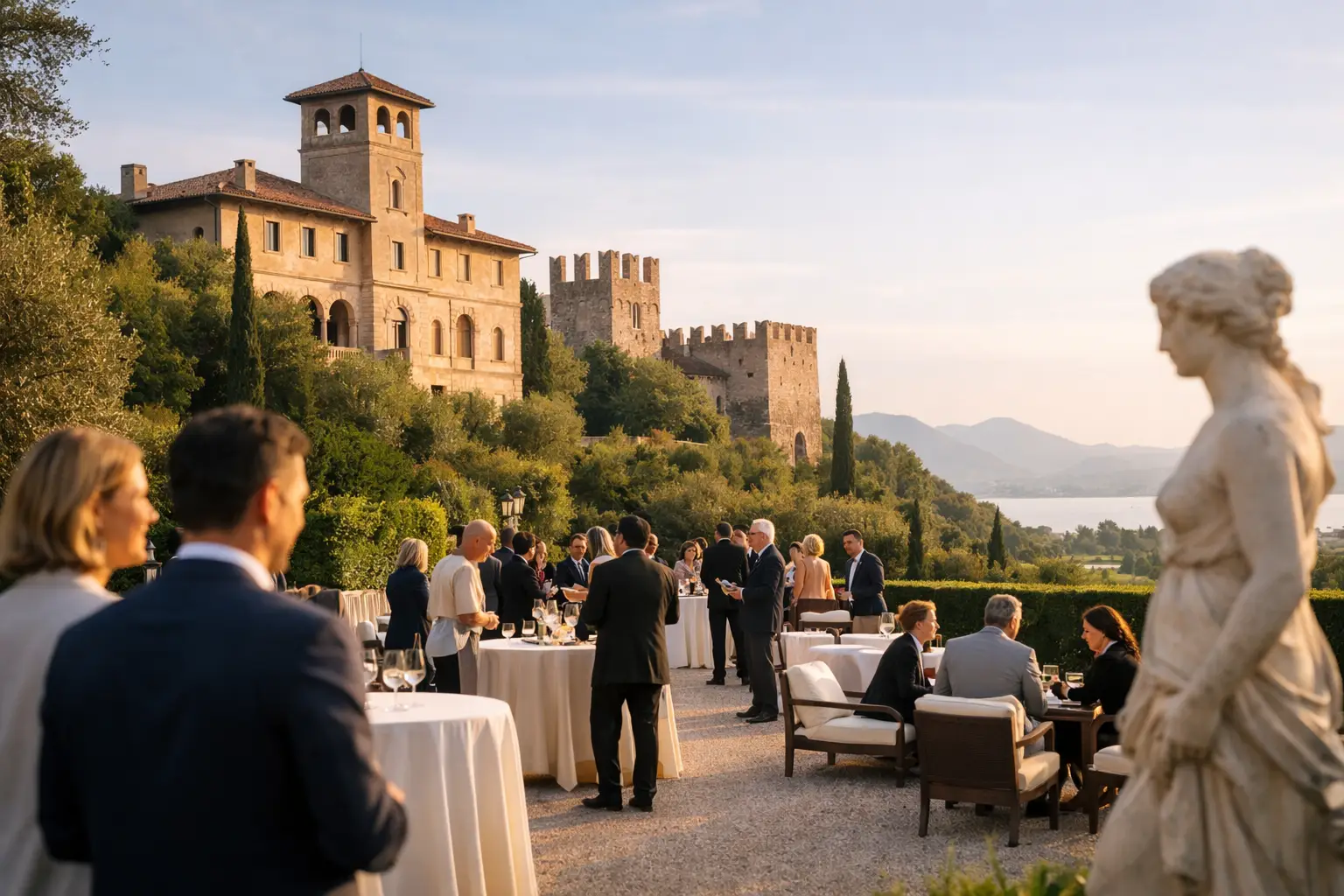
A board dinner in a Renaissance palazzo sends a very different message than the same guest list in a standard hotel ballroom. That is why heritage venues for corporate events continue to hold such strong appeal for brands coming to Italy. They offer more than atmosphere. When chosen well, they shape perception, reinforce positioning, and give attendees a genuine sense of place that modern venues rarely match.
For international planners, though, the appeal comes with pressure. Historic buildings were not designed for registration desks, backstage catering, breakout flows, or branded production schedules. The opportunity is exceptional, but so is the margin for error. Success depends on understanding not only the beauty of the venue, but also the operational realities behind it.
Why heritage venues for corporate events work so well
A heritage setting creates instant distinction. Guests remember the frescoed ceilings, the private courtyards, the centuries-old architecture, and the feeling of being admitted into a place with cultural weight. That memory matters, especially for leadership meetings, incentive programs, gala dinners, product launches, and executive receptions where brand perception is part of the objective.
In Italy, the effect is particularly strong because the venue and the destination reinforce each other. A reception in a Venetian palace, a dinner in a Roman villa, or a conference session in a Florentine historic residence does not feel interchangeable. It feels rooted in the city. For global companies, that helps turn an event from a scheduled program into an experience with narrative value.
There is also a practical advantage. Heritage venues tend to support premium positioning without excessive staging. A space with original architecture, museum-grade interiors, or historic gardens already carries visual authority. Production can then be selective rather than overpowering, which often leads to more elegant results.
What makes a heritage venue right for a corporate event
Not every historic property is suitable for a business audience, and not every remarkable venue supports event delivery at a professional standard. The right choice comes from alignment between guest experience, event objectives, and logistics.
Capacity is the first filter. A venue may be perfect for a 60-person leadership dinner and completely wrong for a 400-guest networking event. Historic rooms often have strict density limits, unusual layouts, protected access points, and limited flexibility on furniture placement. A space that looks generous in photography can become constrained once you account for staging, dining tables, circulation, and technical equipment.
Access is equally decisive. Some of the most impressive properties in Italy sit within restricted traffic zones, pedestrian areas, or historic centers where large vehicle movement is limited. That does not make them unusable. It means transfer planning, arrival sequencing, guest wayfinding, and loading schedules must be designed early and with precision.
Then there is suitability by format. A heritage venue may be ideal for a gala dinner, awards evening, or cocktail reception, yet less appropriate for a full-day conference requiring simultaneous breakout sessions, interpretation booths, exhibition areas, and all-day catering. In those cases, planners often get the best result by pairing a modern meetings venue with a heritage site for the social centerpiece.
The operational trade-offs planners need to know
This is where experienced local management makes the difference between a memorable program and a difficult one. Heritage venues come with constraints, and those constraints are not a drawback if they are identified early.
Technical infrastructure is often the first challenge. Power supply may be limited. Rigging points may not exist. Sound can behave unpredictably in stone halls or frescoed salons. Wi-Fi may need reinforcement. Even simple branding elements can require approval if walls, floors, or historic surfaces are protected.
Timing is another factor. Many heritage properties operate under tighter access windows than contemporary venues. Setup may need to happen in narrow time slots. Noise restrictions may affect entertainment. Curfews can limit late-night programming. If the event includes live performance, speeches, or a complex audiovisual sequence, these details must be confirmed before creative plans are finalized.
Catering also deserves close attention. Some venues have preferred suppliers. Others allow external catering but impose strict service routes, kitchen limitations, or waste management rules. A menu that works perfectly in a purpose-built event space may need adaptation in a historic property with limited back-of-house infrastructure.
Security, guest comfort, and accessibility should never be assumed. Staircases, uneven flooring, limited elevator access, and heritage preservation rules can affect attendee flow. VIP movement and emergency procedures require the same level of planning as in any large-scale event, often with more complexity.
Heritage venues for corporate events in Italy by event type
Italy offers extraordinary range, but the best venue category depends on the purpose of the event.
For executive meetings and private dinners, aristocratic palaces, historic villas, and noble residences are often the strongest choice. They offer privacy, architectural prestige, and the right atmosphere for relationship-building. These settings work particularly well for board-level gatherings, client entertainment, and high-value stakeholder programs where discretion matters as much as style.
For gala evenings and incentive celebrations, castles, cloisters, museum courtyards, and landmark palazzos create stronger theatrical impact. They support arrival moments, live performance, and dining experiences with a sense of occasion. The venue itself becomes part of the guest journey.
For conferences and corporate meetings, the answer is more nuanced. Some historic properties can host plenary sessions beautifully, especially for mid-size groups, but many are better used in combination with a modern conference hotel or congress venue. This blended approach often gives planners the best of both worlds – operational efficiency during the day and cultural distinction in the evening.
For product launches and brand activations, heritage settings can be highly effective when the brand values align with craftsmanship, prestige, innovation through tradition, or premium positioning. If the concept requires heavy scenic build, major vehicle access, or high-volume technical production, venue selection becomes much more selective.
Why local access matters more than photography
A venue search conducted from abroad often begins with visuals, and that is understandable. Italy has no shortage of remarkable spaces. But photography rarely reveals service access, acoustic behavior, permit timelines, guest circulation issues, or whether the venue team is equipped for international corporate standards.
Local access changes the quality of decision-making. It allows planners to compare not only aesthetics, but responsiveness, flexibility, neighborhood logistics, and realistic event fit. This is especially important in peak seasons, when premium historic venues may have limited availability and approval processes can move slowly.
A strong in-country partner can also advise on combinations that make the program stronger overall. Sometimes the best answer is not the most famous venue, but the one that offers better privacy, easier guest flow, stronger catering infrastructure, and a more controlled arrival experience. Those decisions protect both the guest impression and the organizer.
How to evaluate a heritage venue before you commit
The most effective evaluations are strategic rather than purely visual. Start with the event objective. Is the venue meant to impress, facilitate discussion, support content delivery, or reward attendees? Once that is clear, test the venue against non-negotiables such as capacity, accessibility, transfer timing, technical needs, and catering feasibility.
Ask early about exclusivity. In some historic properties, partial privatization is possible; in others, there may be public access, shared courtyards, or museum visitors nearby during setup hours. For corporate groups, exclusivity often has direct impact on security, branding control, and guest experience.
It is also wise to review contingency planning from the start. Outdoor courtyards, terraces, and gardens can be exceptional, but weather backup in heritage venues is not always straightforward. A polished plan B matters just as much as the main scenario.
Finally, check whether the venue can support the level of guest service your audience expects. Arrival should feel effortless. Restrooms should be sufficient. Climate control should be realistic for the season. Historic character is a strength, but comfort still shapes the memory guests take home.
Italy remains one of the most powerful destinations for companies that want business events to feel culturally rich, elevated, and unmistakably specific. Heritage venues can deliver that effect at a very high level, provided they are chosen with operational discipline. The most successful programs respect the building, the city, and the guest journey all at once. When those elements are handled well, history does not sit in the background. It becomes part of the business outcome.

