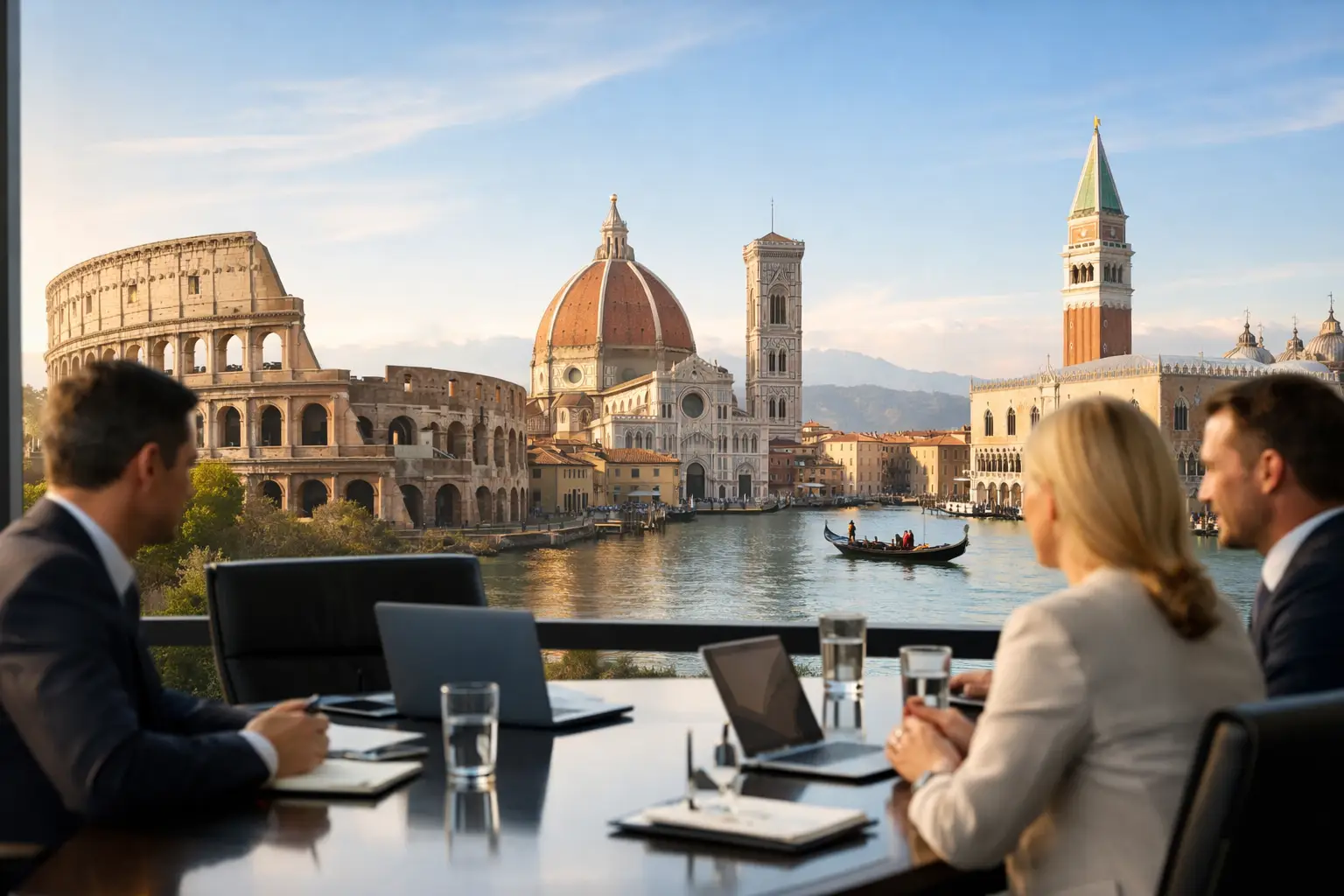
A leadership summit in a Roman palazzo creates one kind of impression. A product launch in Milan creates another. When planners assess the top meeting destinations Italy offers, the real question is not which city is most famous. It is which destination best supports your agenda, your audience profile, your logistics model, and the level of brand experience your stakeholders expect.
Italy remains one of Europe’s strongest choices for meetings and events because it combines infrastructure with emotional impact. Attendees are more likely to remember a general session when it is paired with a setting that carries architectural weight, culinary credibility, and a clear sense of place. For agencies and corporate teams, that advantage only matters when it is backed by reliable operations, realistic transfer times, venue suitability, and local supplier control.
What makes the top meeting destinations Italy stand out
A strong meeting destination needs more than visual appeal. Air access, hotel inventory, venue variety, private event permissions, production standards, and ground transportation all matter just as much as the view from the terrace.
Italy performs well because it offers several destination types within one country. You can stage a large congress in a major business hub, an executive retreat in a heritage city, or an incentive-focused meeting in a waterfront setting without losing overall destination coherence. That gives planners room to align the city with the event objective rather than forcing every brief into the same format.
The trade-off is that Italy rewards local planning discipline. Historic centers are rarely built for modern coach flow. Load-in windows can be tight. Protected venues often require stricter timing and technical planning. For experienced organizers, that is not a drawback. It is simply part of producing meetings in places with real character.
Milan: best for scale, pace, and corporate credibility
Milan is often the most practical answer for international business events. It has the strongest corporate identity in Italy, excellent international air access, a substantial hotel base, and venues that can support everything from board meetings to major conventions. If your program depends on efficiency, punctuality, and a contemporary business atmosphere, Milan usually rises to the top.
The city works particularly well for product launches, annual sales meetings, leadership forums, and events tied to fashion, design, finance, and innovation. Guests understand Milan quickly. The city’s rhythm is direct, and that helps with tight agendas.
Its advantage is clarity. Large groups move more easily here than in many heritage-heavy destinations, and planners can combine modern conference infrastructure with high-end dinners in historic or design-led settings. The compromise is emotional tone. Milan is polished and sophisticated, but it does not deliver the same immediate postcard effect as Venice or Florence. For some brands, that restraint is exactly the right choice.
Rome: best for impact, protocol, and high-level gatherings
Rome brings gravitas. For executive meetings, association congresses, institutional events, and multinational gatherings that need a sense of importance, few destinations perform like the capital. The city offers major international access, broad hotel capacity, and a venue landscape that ranges from formal conference spaces to monumental historic properties.
Rome is especially effective when the event needs to balance substance with ceremony. Opening a conference in a modern auditorium and closing with a dinner in a landmark venue gives a program narrative weight that many cities cannot match.
The challenge is operational complexity. Traffic patterns are not forgiving, citywide events can affect timing, and distances between hotels, venues, and dining locations need careful handling. Rome rewards strong transportation planning and realistic scheduling. Done properly, it offers one of the richest meeting backdrops in Europe.
Florence: best for executive meetings and cultural prestige
Florence is rarely the right choice for the biggest congresses, but it is one of the strongest options for executive groups, leadership retreats, advisory boards, and premium client events. The city’s scale is part of its value. Guests can feel immersed quickly, and the experience becomes more cohesive because major elements of the program are closer together.
For planners, Florence offers a rare combination of accessibility and atmosphere. Renaissance architecture, refined hospitality, and excellent private event settings create immediate distinction without requiring a highly fragmented schedule. A meeting here tends to feel curated.
That said, inventory is more selective than in Rome or Milan. If your event requires very large room blocks, extensive breakout capacity, or heavy exhibition needs, Florence may become limiting. It is strongest when quality matters more than scale and when decision-makers want a setting that feels exclusive rather than corporate.
Venice: best for exclusivity and memorable guest experience
Venice is one of the most distinctive entries among the top meeting destinations Italy can offer, but it is not for every brief. It excels with incentive-driven meetings, board gatherings, luxury client programs, and events where guest memory is a key measure of success.
There is no substitute for arriving by water and hosting an event in a city that feels unlike anywhere else. Venice creates instant anticipation. That emotional value is significant, especially for brands trying to reward, persuade, or deepen relationships.
The operational side requires discipline. Transfers are different, weather can affect movement, and moving equipment or large groups demands careful sequencing. Venice works best when the program is built around the destination rather than forced into a standard conference model. For the right audience, it is exceptional. For a heavily technical, high-volume agenda, another city may be smarter.
Bologna: best for accessibility and efficient congress planning
Bologna does not always lead headline discussions, but experienced planners know its strengths. It is well positioned, easy to reach, and highly effective for conferences, association meetings, and events that need strong infrastructure without the premium pressure of Italy’s most famous cities.
The city has a serious academic and commercial identity, which gives business events credibility. It also sits within practical reach of other northern Italian hubs, making it useful for pan-regional attendance. For organizations focused on content delivery, participant flow, and budget control, Bologna deserves close attention.
Its trade-off is obvious. It offers less spectacle than Venice or Rome. Yet for many planners, that is exactly the benefit. Resources can go into production, hospitality, and guest management rather than into compensating for destination complexity.
Naples and the Amalfi Coast: best for incentive-led meetings with strong emotional appeal
If the goal is to combine business sessions with relationship-building and standout hospitality, Naples and the Amalfi Coast can be highly effective. They are especially suited to executive incentives, leadership retreats, and client events where the environment plays a strategic role.
Naples itself offers history, energy, and access, while the coast delivers prestige and visual drama. This combination can produce extraordinary programs, especially when meetings are intentionally concise and the broader guest journey is part of the value.
Still, these destinations require honest planning. Road transfers can be longer than they appear on paper, seasonality affects traffic and availability, and large-scale logistics need close control. They are strongest when the event brief allows for flexibility, premium pacing, and a destination-first experience.
How to choose among the top meeting destinations Italy offers
The right destination depends on the pressure points in your brief. If you need efficiency, broad hotel stock, and international business appeal, Milan is usually the clearest fit. If your event needs symbolic weight and formal impact, Rome is difficult to beat. If your audience is senior, selective, and experience-driven, Florence often performs better than a larger city. If memory and exclusivity are central, Venice can justify its complexity.
Budget structure matters too. A city that seems less expensive at venue level may create higher transportation, staffing, or timing costs. Likewise, a premium destination may actually improve value if it reduces the need for additional entertainment spend because the location itself does part of the work.
Audience profile should guide the final decision. Sales teams may respond well to pace and energy. Executive boards often value discretion and setting. International associations may prioritize access and room capacity over romance. The strongest event strategies start there, then match the city accordingly.
An experienced Italy partner also changes what is possible. Local knowledge affects venue negotiations, routing decisions, permit timing, supplier selection, and contingency planning. That is where destination appeal becomes executable event design, which is exactly where companies like Love IT DMC create measurable value for overseas planners.
Italy offers range, not just beauty. The smartest choice is the city that supports your message, protects your schedule, and gives guests a reason to keep talking about the event after they return home.

