A gala dinner in Florence can impress in minutes and become complicated just as quickly. A frescoed palace may look perfect in photos, but if coach access is poor, load-in is restricted, or acoustics work against speeches, the evening starts to lose value. That is why selecting florence gala dinner venues is never just a creative exercise. For corporate planners, it is a decision that affects timing, guest experience, production scope, and brand perception.
Florence is one of the strongest destinations in Italy for high-level evening events because the city offers genuine historic prestige in a compact footprint. Guests can move from a conference venue or luxury hotel to a museum, palazzo, rooftop, or cloister in a short transfer window. That proximity matters. It reduces transport risk, supports tighter schedules, and makes it possible to create an evening that feels elevated without overextending the program.
What makes Florence gala dinner venues work for corporate events
The right venue in Florence does more than provide beauty. It needs to support the structure of the evening from arrivals to final departure. For international groups, that usually means balancing atmosphere with very practical questions: guest count, accessibility, rain backup, staging possibilities, noise limits, and the flow between welcome reception, dinner, speeches, and entertainment.
In Florence, venue choice tends to fall into a few strong categories. Historic palaces offer ceremony and visual authority, which works well for awards dinners, executive hosting, and brand moments that require prestige. Museums and heritage sites create a more exclusive and culturally anchored experience, but they often come with tighter technical and timing rules. Rooftop terraces and panoramic venues are powerful for networking-led evenings, especially in spring and early fall, though weather planning becomes central. Villas just outside the city can accommodate larger production needs and more privacy, but transport planning becomes more complex.
The trade-off is usually clear. The more iconic and protected the property, the tighter the operational framework. That is not a drawback if the program is designed around it. In fact, some of the most successful gala dinners in Florence are the ones that respect the venue rather than fight it.
Choosing the right setting for your audience
A leadership dinner for 80 guests has very different requirements from a 400-person incentive closing night. Florence supports both, but not in the same spaces and not with the same event design.
For senior executive groups, intimacy and privacy often matter more than scale. A smaller palazzo with exceptional interiors, candlelit dining rooms, and discreet arrival management can feel far more valuable than a larger landmark venue. Guests notice the quality of the welcome, the pace of service, and the sense of access. In these cases, less production can actually create a stronger result.
For larger corporate groups, efficiency becomes part of the luxury. The best florence gala dinner venues for high attendance are the ones that can absorb guest movement without friction. Wide reception areas, sensible back-of-house access, enough restrooms, clear staging positions, and manageable coach routing all matter. A venue may be spectacular, but if 300 guests are waiting on a staircase or entering in waves because access is limited, the evening starts under pressure.
Brand personality matters too. Some clients want Renaissance grandeur. Others want a cleaner, more contemporary tone with Florence as a backdrop rather than the full story. The city offers both, but forcing a heavily branded, high-tech concept into a delicate heritage venue can create compromises on lighting, rigging, and scenic build. It is often better to match the creative ambition to the physical reality of the property.
Historic palaces and noble residences
These are often the first venues clients imagine, and for good reason. They deliver immediate impact. Frescoed ceilings, grand staircases, internal courtyards, and formal salons create an arrival experience that feels unmistakably Florentine.
They are especially effective for black-tie dinners, recognition events, and milestone celebrations where the setting itself should carry status. The operational consideration is usually flexibility. Many of these properties have protected surfaces, strict supplier timing, and limitations on open flame, amplified sound, or heavy installations. A strong gala dinner plan in this setting is elegant, tightly timed, and technically disciplined.
Museums, cloisters, and heritage landmarks
These venues bring rarity. Hosting dinner in a museum or significant cultural site gives guests a sense of privileged access that standard luxury venues cannot easily replicate. For international audiences, this can be one of the most memorable ways to connect the event to Florence.
However, these spaces are rarely plug-and-play. Curatorial restrictions, timed access, and preservation requirements shape every production decision. The format often works best when there is a clear sequence – private viewing, aperitivo, then dinner in an approved area – rather than trying to transform the entire site into a conventional banquet hall.
Rooftops and panoramic venues
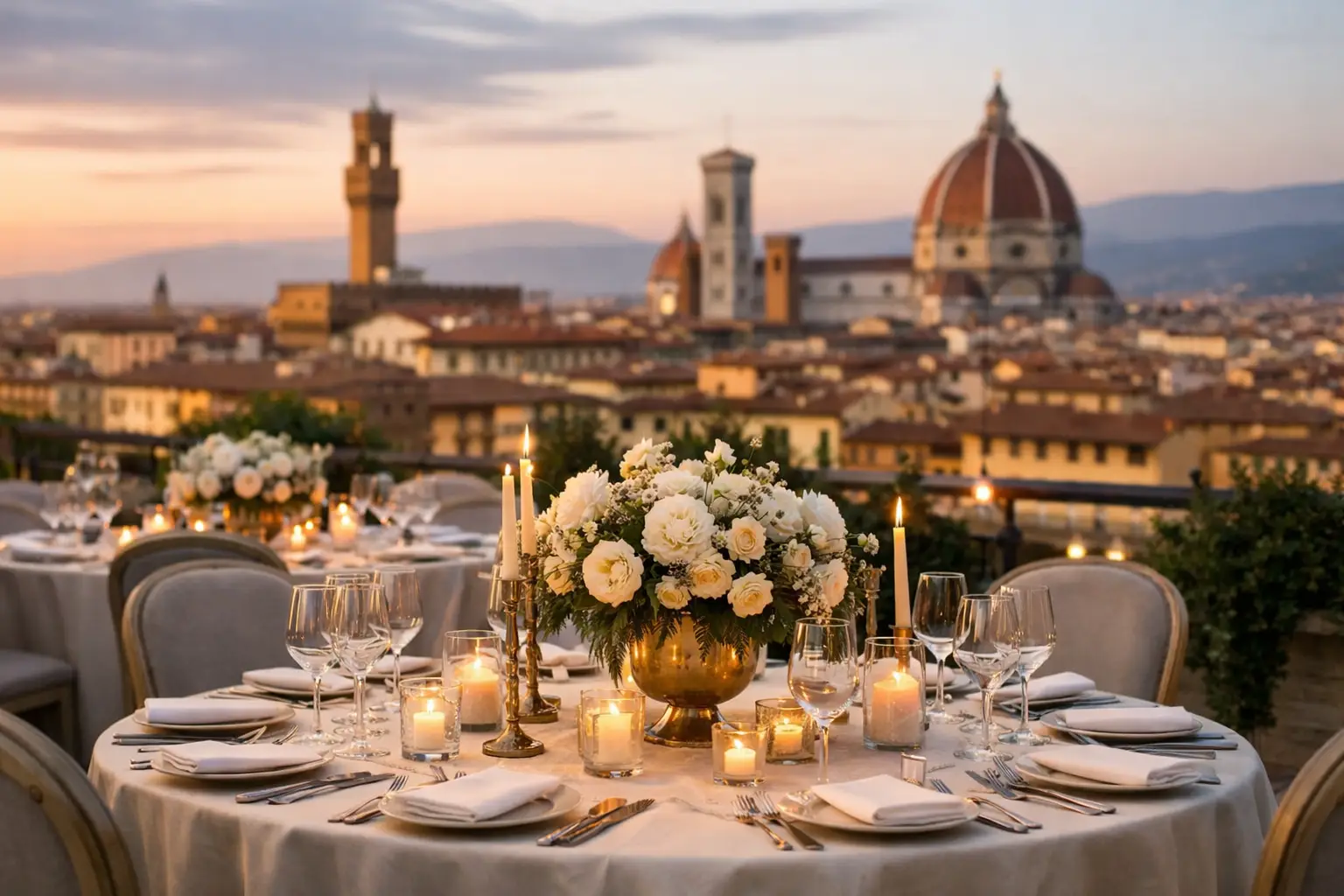
A skyline dinner overlooking Florence can be highly effective for welcome nights, summer celebrations, and social-first incentive programs. The atmosphere is lighter and more contemporary, and the city itself becomes part of the staging.
This format depends heavily on season, start time, and backup planning. Sunset timing, wind exposure, and temperature shifts matter more than many clients expect. If the event includes speeches, live music, or AV-heavy moments, a rooftop should be assessed as a technical venue, not just a scenic one.
Villas and estates near the city
For groups that need privacy, broader entertainment options, or stronger production freedom, a villa outside central Florence can be the better decision. These properties often allow more flexibility for live performances, custom décor, outdoor dining, and branded experiences.
The trade-off is transportation. Transfer times may still be reasonable, but they must be managed with precision, especially if guests are staying across multiple hotels in the city center. A villa dinner succeeds when movement is controlled and the journey feels intentional rather than inconvenient.
The logistics behind a successful gala dinner in Florence
Venue sourcing is only one part of the equation. In Florence, logistics shape the guest experience almost as much as the architecture does.
City-center access can be restricted, especially for large vehicles. Some venues require the final approach on foot or with smaller shuttles. Others have narrow load-in windows that affect floral installation, kitchen timing, and entertainment setup. Historic properties may not have elevators, which changes staffing plans and equipment choices. Noise regulations can affect live music, particularly in residential or protected areas.
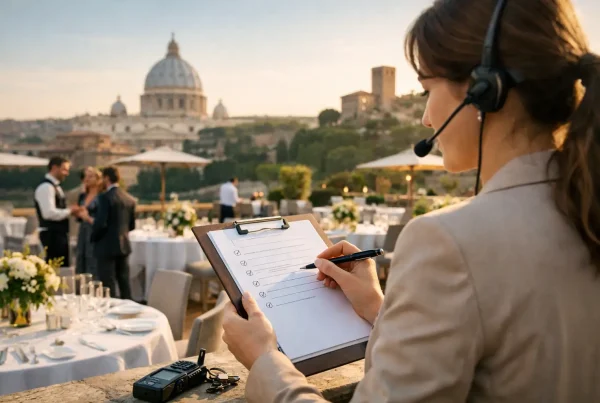
This is where local control matters. A dinner that looks effortless to guests is usually the result of tight pre-planning: venue inspections, timed routing, supplier scheduling, backup power review, weather contingencies, and a realistic understanding of what the venue can support. For overseas planners, that operational clarity is often the real value. Love IT DMC approaches Florence this way – not as a postcard setting, but as a live event environment that needs to perform under pressure.
Catering is another area where assumptions can create problems. Not every heritage venue has an on-site kitchen capable of high-volume service. In some cases, external catering must work from temporary or limited prep areas, which affects menu style and service speed. The smartest approach is to align the dining format with the venue’s real capabilities. A refined plated dinner may be possible, but in some settings an elevated multi-station format can actually deliver better quality and flow.
How to evaluate florence gala dinner venues without guesswork
The most reliable venue decisions come from asking better questions early. Capacity should always be tested against the intended setup, not just the maximum number on a fact sheet. A venue that holds 250 for dinner may feel tight once a stage, dance floor, or entertainment area is introduced.
It is also worth confirming exclusivity, curfew, rehearsal access, and contingency options before the venue is emotionally sold to stakeholders. Florence has many beautiful spaces, but not all are equally suitable for corporate event objectives. Some are exceptional for atmosphere and weaker for production. Others are less iconic at first glance but perform much better for guest comfort and timing.
A useful test is simple: if the venue lost its wow factor for a moment, would it still be the right operational choice? If the answer is no, it may not be the strongest option.
The best gala dinners in Florence are the ones where venue, program, and logistics are aligned from the beginning. Guests remember the setting, of course. They also remember whether the evening felt smooth, well paced, and worth their travel.
Florence gives planners rare material to work with – history, intimacy, prestige, and visual drama. The real advantage comes when those qualities are translated into an event that runs with control and feels effortless from first arrival to final departure.