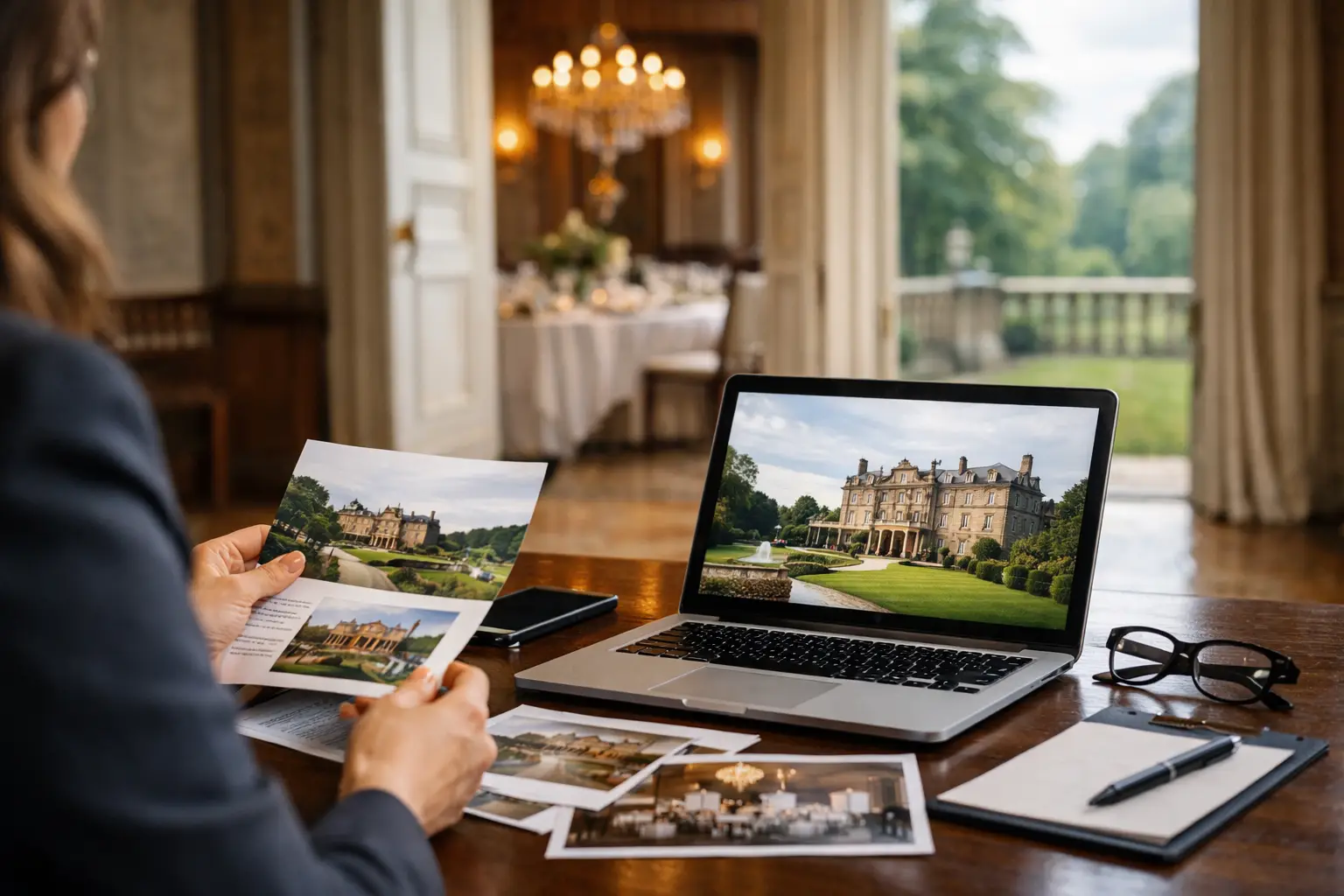
A 16th-century palazzo may create the exact first impression your guests will remember. It can also introduce restricted access, delicate interiors, early sound curfews, and a load-in route designed centuries before flight cases and LED walls existed. Knowing how to source heritage venues means treating architectural beauty and operational reality as one decision – not two separate workstreams.
For corporate events in Italy, heritage properties can turn a meeting, gala dinner, product launch, or incentive program into a meaningful brand experience. The right setting gives guests a sense of place that no purpose-built ballroom can replicate. But the venue must work as hard as it inspires. That requires local knowledge, precise due diligence, and early coordination with the people responsible for protecting the property.
Start With the Event, Not the Building
Italy offers an extraordinary range of historic settings: Renaissance palaces, former monasteries, private villas, museums, opera houses, castles, cloisters, and archaeological sites. The temptation is to begin with a visual wish list. A stronger approach begins with the event brief.
Establish the non-negotiables before reviewing venue options. These usually include guest count, event format, dates, budget parameters, accommodation strategy, transportation requirements, production needs, and the level of privacy required. A board dinner for 40 guests can operate beautifully in a frescoed private residence. A 700-person awards dinner needs a very different combination of capacity, kitchen support, guest circulation, safety planning, and back-of-house access.
Also define the purpose of the experience. Is the venue meant to reward top performers, support an executive message, launch a luxury product, or create a strong connection between an international audience and Italy? The answer influences the destination and the property itself. A Roman museum after hours carries a different tone from a lakeside villa near Milan or a Florentine palace overlooking the Arno.
The most successful briefs leave room for originality while remaining firm on operational thresholds. A heritage venue should elevate the concept, not force a compromised program.
How to Source Heritage Venues With Local Access
The most sought-after historic venues are not always easily found through public directories. Many are privately owned, managed through foundations, subject to municipal approvals, or available only through established local relationships. Availability can also change according to restoration schedules, religious calendars, museum programming, or the owner’s private use of the property.
This is where an experienced destination management partner adds tangible value. Rather than presenting a broad collection of attractive spaces, a local team can identify venues that are genuinely suitable, available for the required date, and realistic for the event’s scale. At Love IT DMC, venue sourcing is approached alongside transportation, production, catering, staffing, and guest-flow planning because each element affects whether a property can perform successfully.
A first shortlist should explain more than architecture and capacity. It should clarify the venue’s event history, exclusivity options, restrictions, estimated rental structure, access routes, and the approvals likely to be required. This gives overseas agencies and corporate teams a reliable basis for decision-making before they commit time to site inspections or creative development.
It is also wise to ask whether the quoted capacity reflects a comfortable guest experience or a technical maximum. In a historic ballroom, 220 seated guests may be possible, but 180 may allow better spacing, service lanes, stage sightlines, and an elegant atmosphere. Capacity figures without context can be misleading.
Assess the Guest Journey From Arrival to Departure
Heritage venues are defined by character, and character often comes with physical constraints. A grand entrance may be reached by a narrow lane. A dramatic courtyard may be beautiful for cocktails but exposed to weather. A historic upper floor may require a carefully managed elevator schedule or may not accommodate guests with limited mobility at all.
Assess the full guest journey, not simply the principal event room. Consider airport arrivals, hotel locations, coach access, drop-off points, security screening, registration, cloakrooms, restrooms, smoking areas, and departure timing. For gala dinners, evaluate the transition from welcome reception to dining room, then from dinner to entertainment or after-party. Each move should feel intentional and comfortable.
Accessibility deserves particular attention. Italian heritage buildings can have structural limitations, but limitations should be identified early and addressed with practical alternatives. Temporary ramps, golf-cart transfers, accessible routing, dedicated hosts, and carefully timed lifts may be appropriate in some cases. In others, the venue may simply not be the right choice for the guest profile.
For larger groups, transportation planning is often the determining factor. A location that is perfect for 120 guests arriving in cars may be unsuitable for 12 coaches. Local traffic regulations, restricted zones, pedestrian streets, and city-center access windows must be confirmed before the venue is presented as a viable option.
Examine Production and Preservation Together
A historic property is not an empty canvas. It is a protected environment with rules designed to preserve its interiors, artworks, gardens, and structure. Those rules should shape the creative plan from the beginning.
Confirm what can be brought into the venue, where it can enter, and how long installation may take. Ask about maximum floor loads, rigging permissions, power supply, generator use, open flames, confetti, haze, projection, amplified music, and branded materials. In some properties, no adhesive may touch the walls, no equipment may cross a particular threshold, and no lighting can be placed near artworks. These are not minor details. They affect budget, design, and timing.
The best event design responds to the building rather than competing with it. Architectural lighting can reveal stonework, frescoes, or vaulted ceilings without overwhelming the room. Custom staging may need to be lower and lighter than a standard setup. Florals may need to avoid staining surfaces or blocking protected views. A refined production partner understands that restraint can make a heritage setting feel more exclusive, not less impressive.
Sound is another common challenge. Many historic venues have strict decibel limits or mandatory end times, particularly in residential city centers. If a high-energy performance is essential, build a two-part evening: dinner and formal entertainment in the heritage venue, followed by a late-night celebration at a suitable nearby location. This protects the guest experience while respecting the venue’s conditions.
Build the Budget Around Reality
Heritage venue costs are rarely limited to a rental fee. Depending on the property, the budget may need to include custodians, security, fire safety personnel, cleaning, conservation supervision, permits, mandatory suppliers, insurance, extended access hours, and transportation solutions for restricted locations.
This does not mean historic venues are poor value. It means they need a transparent budget structure. A lower rental fee can become expensive if the property requires extensive temporary power, furniture, kitchen equipment, or labor-intensive guest transfers. Conversely, a venue with a higher initial fee may include established event infrastructure and reduce downstream production costs.
Ask for clarity around cancellation terms, weather contingency, exclusivity, overtime, and potential damage deposits. Outdoor courtyards and gardens are particularly dependent on a credible wet-weather plan. A tent is not always permitted, and a backup room may not have the same capacity or visual impact. The contingency must be operationally sound, not merely reassuring on paper.
Secure Approvals Early and Keep One Operational Lead
Some heritage events require permissions from multiple parties: venue management, owners, local authorities, cultural heritage offices, police, fire officials, or neighborhood representatives. Approval timelines can be longer than international teams expect, especially when plans involve street closures, complex production, music, drones, or prominent branding.
Early planning gives organizers more options and protects the event from last-minute redesigns. As a practical rule, major heritage events should begin venue conversations as soon as dates are under consideration. The most exclusive properties often have limited event calendars and may prioritize requests with clear production plans and credible local management.
A single in-country operational lead is equally valuable. Heritage events involve many moving parts, and suppliers need consistent direction on access times, preservation protocols, arrival sequences, and service standards. When the caterer, production team, transportation provider, and venue coordinator work from one approved schedule, the result feels calm to the guest even when the operation behind it is highly detailed.
Choose a Venue That Supports the Story You Need to Tell
The strongest heritage venues do more than provide a remarkable backdrop. They make the corporate occasion feel rooted in Italy, considered in every detail, and worthy of the guests invited to experience it.
Choose the property that can protect that promise from the first coach arrival to the final departure. When history, hospitality, and logistics are planned with equal care, a heritage venue becomes more than a memorable setting. It becomes proof that an ambitious event can be both extraordinary and flawlessly managed.

