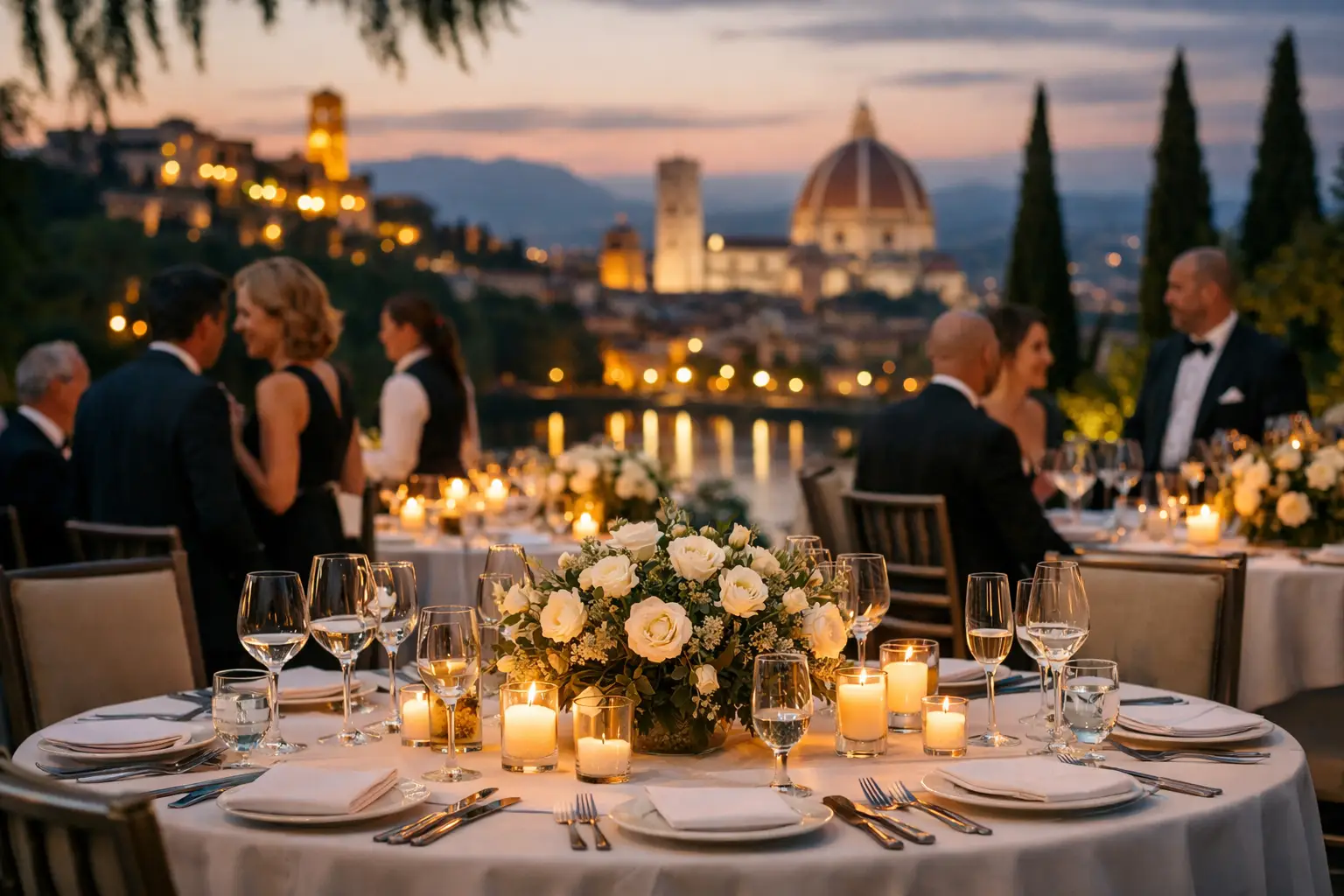
A gala dinner earns its place on the agenda when guests can feel that every choice was made for them: the arrival route, the first glass of wine, the room reveal, the pace between courses, and the final departure. The best corporate gala dinner ideas do more than fill an evening after a conference. They turn an Italian destination into a convincing expression of a company’s standards, culture, and ambition.
For international planners, the opportunity is exceptional, but so is the operational responsibility. A historic venue may have restricted access. A waterside arrival may depend on exact boat schedules. A menu that feels beautifully local for 40 guests must be engineered differently for 400. The strongest concepts are those where creative direction and logistics support each other from the first briefing.
What the Best Corporate Gala Dinner Ideas Must Deliver
A memorable gala needs a clear purpose before it has a theme. Is the dinner designed to celebrate performance, introduce a new brand direction, reward top achievers, or bring global teams together after an intensive meeting? The answer determines the atmosphere, entertainment, menu style, and level of formality.
Italy gives planners a rare range of credible settings: Renaissance palaces, contemporary design spaces, private museums, vineyards, theaters, lakeside villas, and restored industrial buildings. The venue should not merely look impressive in photographs. It needs to support guest flow, production access, dietary requirements, speech visibility, acoustic control, and a reliable departure plan. Grandeur is most effective when it is also well managed.
12 Gala Dinner Ideas That Feel Distinctly Italian
1. A Renaissance Palace Dinner in Florence
A candlelit dinner in a Florentine palazzo gives an awards evening immediate authority. Use the architecture as the focal point, with restrained florals, warm lighting, and a menu built around Tuscan ingredients rather than heavy themed decor. This format works especially well for executive groups and premium incentives.
The practical question is capacity. Historic rooms can be spectacular but segmented, so table plans, sightlines, and service timing require detailed advance planning. A thoughtful room sequence can turn that constraint into part of the experience.
2. An After-Hours Museum Reception in Rome
Private museum access creates a sense of occasion that a ballroom rarely matches. Guests can move through curated galleries during aperitivo before entering a separate dining space for the formal program. It is ideal for organizations that want to associate their event with heritage, creativity, or long-term vision.
This concept depends on disciplined production design. Museum regulations often limit lighting positions, sound levels, catering equipment, and installation times. The result is worth the preparation when every technical element is designed around the venue’s preservation requirements.
3. A Venetian Palazzo With a Modern Masked Moment
Venice calls for elegance, not costume theater. A private palazzo dinner can begin with guests arriving by water taxi, followed by a short masked welcome performance or an artisan-led mask presentation. The rest of the evening should remain contemporary and refined, allowing the building, the lagoon, and the cuisine to carry the story.
Water logistics are central. Arrival windows, boat manifests, weather contingencies, and late-night transfers must be coordinated precisely, particularly for groups moving from hotels across different parts of the city.
4. A Private Opera House Gala
For a gala that needs a formal crescendo, consider a private dinner in an opera house or a reception paired with a short vocal performance. Rather than scheduling a full concert that can interrupt networking, a carefully placed ten-minute performance before dinner or after the main course can create a powerful emotional peak.
This is a strong choice for recognition events, leadership summits, and formal client hospitality. It also requires serious attention to rehearsal schedules, technical riders, and the timing of guest movement through public-facing areas.
5. A Vineyard Dinner With a Culinary Masterclass
A vineyard setting outside Florence, Rome, or Milan can deliver a more relaxed but still high-value gala. Begin with a guided tasting or a short introduction from the winemaker, then move to a long-table dinner under a covered terrace, in a barrel room, or among the vines when conditions allow.
The appeal is authenticity, but planners should avoid treating the countryside as automatically simple. Remote venues may need additional power, transportation coordination, weather cover, and late-evening return transfers. The right infrastructure makes rustic elegance feel effortless.
6. A Lake Como Villa Celebration
A lakeside villa offers a polished setting for incentive groups, board dinners, and celebrations where relationships matter as much as programming. Guests can arrive by boat, enjoy an aperitivo on the terrace, and dine in an interior salon or a purpose-built transparent structure overlooking the water.
Lake venues are particularly effective for smaller and mid-sized groups. For larger numbers, the decision comes down to whether the site can accommodate staging, catering back-of-house, and guest circulation without losing the intimacy that makes the location special.
7. A Milan Design District Dinner
Milan is the natural choice for companies that want a gala with contemporary energy. A former factory, design showroom, or industrial event space can be transformed with architectural lighting, live food stations, projection content, and a DJ-led finale. The tone is confident, urban, and highly adaptable to brand identity.
This format is often more production-friendly than a heritage location. It can support larger guest counts and ambitious technical requirements, though it needs a strong creative brief to avoid feeling like a generic black-box event.
8. An Archaeological Setting With a Carefully Controlled Reveal
Rome can offer extraordinary archaeological backdrops for receptions and select dinners. The most effective approach is restraint: an arrival drink with views of ancient ruins, a brief interpretation from an expert host, then dinner in a nearby approved space that supports service and production properly.
Not every historic site is suitable for a full gala. Access restrictions, permits, noise limits, and preservation rules can be substantial. A sophisticated alternative often creates a better guest experience than forcing a dinner format into a location that cannot support it.
9. A Regional Food Journey Rather Than One Formal Menu
For companies with diverse international audiences, a progressive Italian food journey can make the evening more conversational. Start with regional aperitivo stations, move to seated dining with tableside storytelling, and end with a dessert salon featuring gelato, pastries, and digestifs.
The distinction matters: this should feel curated, not like a food fair. Each element needs a clear narrative, consistent presentation, and enough service staff to prevent queues from disrupting the evening’s rhythm.
10. An Artisan-Led Dinner Experience
Italian craftsmanship offers meaningful content beyond entertainment. A gala might include a live demonstration by a Murano glass artist in Venice, a leather artisan in Florence, or a printmaker in Rome, with guests receiving a discreet, personalized keepsake at their table.
This works best when the craft has a genuine relationship to the destination and the company’s message. It is less effective when it becomes a generic activity with no connection to the evening’s purpose.
11. A Cinematic Arrival Sequence
Sometimes the most memorable idea is not the dinner itself but the five minutes before it. Consider a welcome route through a candlelit courtyard, a short music-led procession, or a terrace reveal after guests have been gathered in a quieter reception area. The transition creates anticipation and gives the host a natural moment to welcome the room.
A cinematic arrival requires more than attractive lighting. It depends on security, guest pacing, accessibility, weather planning, and clear communication for anyone arriving late. When managed well, it makes even a familiar venue feel newly discovered.
12. A Gala With a Local Legacy
A corporate dinner can leave a more meaningful impression when it supports a local cultural, educational, or hospitality initiative. This may take the form of a chef collaboration that highlights regional producers, a contribution connected to venue restoration, or a guest gift created by a social enterprise.
The gesture must be credible and proportionate. Guests respond to real local partnership, not an add-on announced at the last minute. Build the initiative into the event narrative from the outset and communicate its purpose clearly.
Design the Guest Journey Before the Decor
The most successful gala concepts are built from the guest journey outward. Start with transfer duration, hotel departure waves, security checks, cloakroom capacity, and arrival hospitality. Then establish where guests will network, where they will hear key messages, how service will move through the room, and how they will leave without a long wait at the end of the night.
This is particularly relevant in Italy, where many exceptional venues were not designed for modern corporate events. A historic courtyard may need discreet weather protection. A palace staircase may require staggered movement. A venue on an island may need a second transport plan. These are not reasons to compromise on ambition. They are the details that protect it.
Love IT DMC approaches gala dinners as both an experience and an operational system, coordinating local suppliers, technical production, transport, hospitality, and venue requirements into one accountable plan. For overseas teams, that local control provides the confidence to choose settings that are genuinely distinctive without creating unnecessary risk.
The right gala dinner idea is the one guests continue discussing after they return home, not because it was extravagant, but because every moment felt considered, distinctly Italian, and entirely appropriate to the brand that brought them there.

