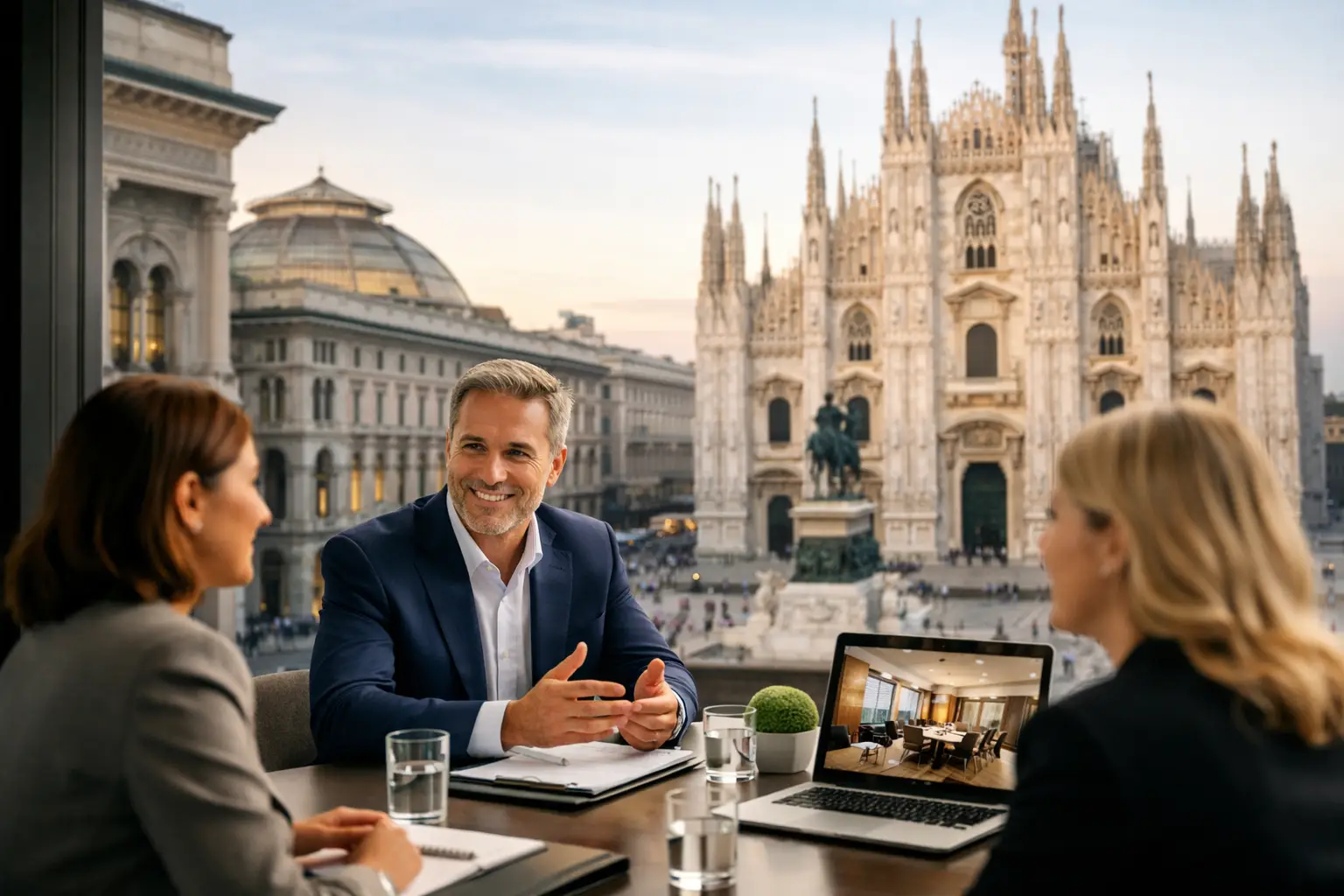
A venue can look perfect on paper and still fail the event the moment guests arrive. In Milan, that gap matters more than many planners expect. Milan meeting venue sourcing is not simply a search for an attractive address. It is a commercial decision shaped by access, pacing, brand fit, delegate flow, technical requirements, and the standards international guests bring with them.
Milan rewards ambition. It is efficient, globally connected, and consistently relevant for industries such as fashion, finance, design, life sciences, and technology. That makes it a strong choice for leadership meetings, product launches, sales conferences, board gatherings, and incentive extensions. It also means the best spaces move quickly, especially around trade fairs, fashion calendar peaks, and major citywide events.
For agencies and corporate teams planning from abroad, the real challenge is not finding options. It is finding the right option early enough, with the right terms, and with a full understanding of what the venue can actually deliver on event day.
Why Milan meeting venue sourcing needs local judgment
Milan has breadth. You can place a board meeting in a discreet luxury hotel, stage a conference in a modern congress venue, host a private dinner in a historic palazzo, or take over an industrial design space that feels unmistakably Milanese. That variety is valuable, but it also creates risk if selection is based only on images, rate cards, or general location.
A venue in the city center may look ideal for international attendees, yet present serious coach access restrictions. A heritage property may offer exceptional atmosphere but tighter load-in windows, lower flexibility for branding, or stricter noise limits. A large contemporary venue may solve capacity and AV needs, but weaken the sense of exclusivity a senior audience expects. The right decision depends on the meeting objective as much as the venue itself.
This is where local sourcing becomes strategic. Timing, neighborhood rhythm, supplier relationships, municipal constraints, and honest knowledge of each venue’s operational strengths are what turn a shortlist into a successful event.
Start with the meeting, not the building
The strongest sourcing process begins by defining what the venue must do. That sounds obvious, but it is often where expensive inefficiencies begin. A meeting venue is not just a backdrop. It controls registration flow, catering movement, breakout quality, executive privacy, accessibility, set design options, and how confidently the program runs from first arrival to final departure.
For a leadership summit, privacy and controlled access may carry more weight than architectural drama. For a distributor conference, plenary sightlines, breakout adjacency, and efficient catering circulation may matter most. For a product reveal, ceiling height, rigging capability, backstage management, and guest arrival choreography can be decisive.
When sourcing starts from those realities, the shortlist improves immediately. It becomes easier to eliminate venues that are impressive but impractical, or cost-effective but misaligned with the audience.
What experienced planners assess first
Capacity is only the starting point. The better questions are whether the room feels right at the intended attendance, whether breakout rooms are logically placed, and whether public areas can absorb guest peaks without congestion. Arrival experience also matters. A meeting that begins with unclear drop-off, slow elevator movement, or scattered registration loses momentum before the first speaker is on stage.
Technical delivery should be examined early, not after selection. Milan offers excellent production standards, but not every venue is equally prepared for complex staging, hybrid broadcasting, or high-spec executive presentations. Ceiling heights, power distribution, rigging rules, acoustic behavior, and back-of-house access all shape budget and feasibility.
Then there is the hospitality layer. In Milan, expectations are high. Food quality, service tempo, room styling, and staff responsiveness influence how attendees judge the entire program. This is especially true when the guest list includes senior leadership, top clients, or global partners.
The main venue categories in Milan
Milan works because it can match very different event personalities without losing operational credibility. The question is not which category is best in general. It is which category supports your format and message most convincingly.
Luxury hotels remain a reliable choice for executive meetings, board sessions, press gatherings, and conferences that benefit from accommodation, meeting rooms, and service delivery under one roof. They simplify movement and usually offer stronger contingency support. The trade-off is that they may feel less distinctive if the brief calls for a strong local signature.
Purpose-built congress and conference venues are the practical answer for larger-scale programs. They handle volume, exhibit elements, complex stage builds, and multi-track agendas well. Their limitation is atmosphere. They often need more creative production and hospitality layering to feel branded and memorable.
Historic palazzi and cultural venues offer exactly the sense of place many international clients want from Italy. They can transform a meeting into an experience with real emotional value. They also require careful management. Heritage limitations, permitting considerations, and tighter technical allowances can affect timing, setup, and cost.
Design-forward lofts, showrooms, and converted industrial spaces suit brands that want contemporary Milan rather than classic Milan. They are often excellent for launches, networking-led events, and fashion-adjacent programs. The trade-off is that infrastructure can vary significantly, so temporary production, catering support, and guest services may need to be built in more extensively.
Timing changes everything in Milan
A venue that is available and sensibly priced in one month can become nearly impossible in another. Milan’s business calendar is active throughout the year, but certain periods compress availability dramatically. Major fairs, Fashion Week activity, and Salone del Mobile influence venue hold patterns, hotel rates, staffing pressure, and transportation demand across the city.
That does not mean planners should avoid peak periods outright. Sometimes those dates are commercially relevant and worth the premium. It does mean sourcing must begin earlier, and the venue decision should be made with a realistic view of what else the city is carrying at the same time.
Lead time also affects leverage. When sourcing starts late, teams are often forced to compromise on either location, terms, or guest experience. Early sourcing protects optionality. It also allows proper technical review, contract negotiation, and alignment with hotels, transfers, and off-site functions.
Neighborhood choice is part of the event strategy
In Milan, geography shapes guest perception. The city center gives international attendees immediate access to landmarks, premium hotels, and a strong sense of arrival. It works well for executive programs, luxury brands, and events where limited transfer time is essential.
City fringe and redevelopment districts can be smarter for larger meetings or contemporary brand experiences. They often provide better loading access, larger footprints, and stronger value per square foot. For the right audience, they can also feel more current and creatively credible.
But distance on a map is not the only issue. The real question is transfer reliability at your event hours, especially for airport arrivals, evening functions, and large group departures. A venue that appears centrally convenient can still create friction if coaches cannot stage efficiently or if attendee movement depends too heavily on fragmented transport.
Contracts, concessions, and the details that protect the program
Good sourcing is commercial as well as creative. Rate is important, but it is rarely the whole story. The stronger negotiation often happens around hold periods, cancellation terms, exclusivity windows, food and beverage minimums, staffing inclusions, overtime, setup access, branding permissions, and technical restrictions.
These details matter because venue cost can be distorted by hidden operational consequences. A lower room rental may be offset by expensive preferred-supplier rules or tight access windows that increase labor. A visually strong venue may require substantial temporary infrastructure. A hotel package may look efficient until you understand attrition, room block terms, or service cutoffs for a dense agenda.
Experienced local support helps planners read beyond the headline figure. It also helps them distinguish between negotiable points and venue policies that are unlikely to move.
What international clients often underestimate
The first is pace. Milan moves quickly, and top venues do not wait for long internal approval cycles. The second is specificity. A brief that says elegant, central, and flexible is too broad for efficient sourcing in a market with this much variation.
The third is how much the venue influences every other supplier line. Transportation, production, catering style, registration design, security, entertainment timing, and guest hospitality all become easier or harder based on the venue choice. That is why the sourcing phase deserves senior attention. It sets the conditions for the whole event.
For many overseas planners, the best outcomes come from treating venue sourcing as an operational workstream rather than an early procurement task. That means site assessment, technical review, contracting, and guest logistics are considered together. It reduces surprises and usually improves budget control.
A city like Milan can deliver precision and impact in the same program. That is exactly why it remains one of Italy’s strongest MICE destinations. The venue, however, has to do more than impress in a presentation deck. It has to support the meeting you are actually running, the audience you are actually hosting, and the standards your stakeholders will remember. When that alignment is right, Milan does not just host the event. It sharpens it.

