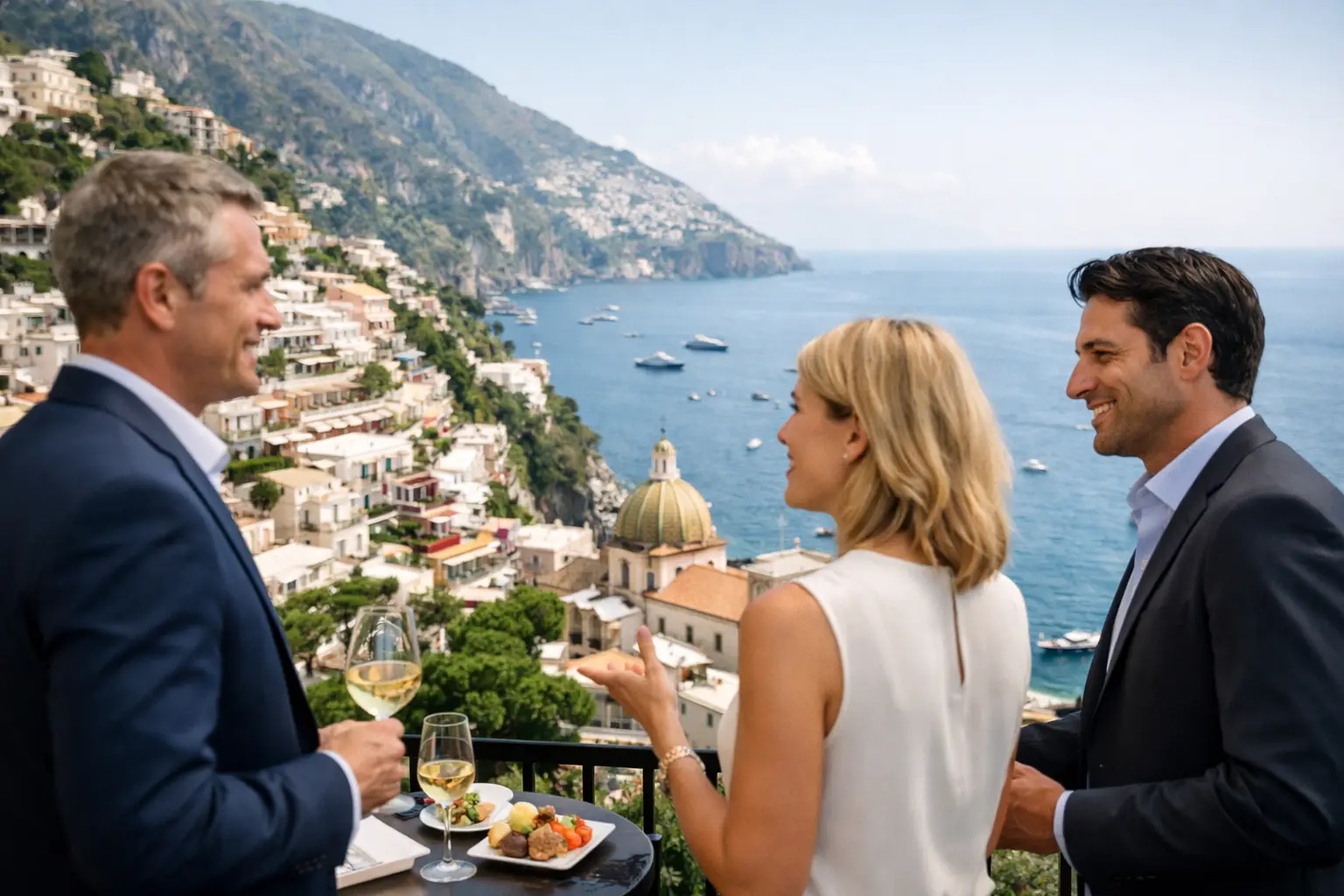
A President’s Club trip should feel earned the moment guests arrive. In Italy, that feeling starts fast – a private transfer through Rome at golden hour, a welcome dinner in a historic palazzo, a view over Venice before the first toast is poured. Incentive travel in Italy has that rare ability to signal prestige immediately while still giving organizers practical range across budgets, group sizes, and business goals.
For corporate teams and agencies, that matters. An incentive program is not simply a reward. It is a brand statement, a retention tool, and often a visible expression of company culture. The destination has to do more than look impressive in a brochure. It has to work operationally, support varied guest expectations, and create experiences that feel both exclusive and well considered. Italy does that exceptionally well when the program is planned with local knowledge and tight control.
What makes incentive travel in Italy so effective
Italy offers a combination that few destinations can match. There is global recognition, strong air connectivity, iconic cities, and a deep bench of premium venues. At the same time, the country gives planners multiple ways to shape the mood of a program. Rome can deliver grandeur and ceremony. Milan suits brands that want modern energy and fashion credibility. Florence brings art, intimacy, and Renaissance elegance. Venice creates immediate emotional impact in a way that almost no urban destination can.
That variety is not just aesthetic. It gives planners strategic flexibility. A technology company launching a high-performance reward program may want a sleek, contemporary atmosphere with private buyouts and fine dining. A legacy brand might prefer heritage venues, classical music, and a stronger sense of history. Italy can support both without forcing the experience to feel manufactured.
There is also a practical advantage in the density of quality experiences. In many destinations, guests spend too much time moving between the hotel, dinner, activities, and evening entertainment. In Italy, especially in core incentive cities, a great deal can be achieved within compact, visually rich settings. That helps maintain pace, reduces transport fatigue, and improves the overall guest experience.
The business case behind the destination appeal
The emotional power of an incentive trip is important, but decision-makers still need a clear business rationale. Italy performs well here because the reward feels substantial. Attendees recognize the destination instantly. That recognition increases anticipation before travel and improves internal communications around the program itself.
It also supports memory. People may forget a generic luxury hotel in a pleasant climate. They are less likely to forget a gala dinner beneath frescoed ceilings, a private after-hours museum visit, or a closing evening on the Venetian lagoon. When recognition is tied to moments with real cultural weight, the reward tends to stay with people longer.
That said, prestige alone is not enough. Incentive travel only succeeds when the guest journey is managed carefully. Flight windows, transfer timing, rooming lists, multilingual staffing, dietary complexity, weather alternatives, and attendee communication all affect how the program is perceived. A beautiful destination can expose weak planning very quickly. Italy rewards ambition, but it also demands coordination.
Choosing the right Italian destination for your audience
The best incentive travel in Italy starts with audience fit, not postcards. Rome works particularly well for groups that want scale and symbolism. It can handle large arrivals, major gala settings, and programs built around history, leadership, and celebration. The city delivers drama naturally, but it needs disciplined transport planning because timing can shift quickly across central areas.
Milan is often underestimated for incentives. For the right brand, it is one of the strongest choices in the country. It suits luxury, finance, design, automotive, and innovation-led companies that want a polished, metropolitan feel. Programs can be cleaner, faster paced, and more contemporary than in the classic heritage cities.
Florence is a strong choice when intimacy matters more than scale. It is ideal for senior achievers, executive groups, and clients who want emotional richness without the sprawl of a capital city. The city feels curated by nature, which allows even a short program to feel elevated. Space, however, can be more limited for very large groups, so venue sequencing matters.
Venice creates instant exclusivity. Guests arrive and know they are somewhere exceptional. It is particularly effective for short, high-impact incentives where the destination itself is part of the reward. But Venice requires careful logistics, especially for luggage handling, water transfers, and access timing. The experience is extraordinary when managed well and frustrating when it is not.
Designing a program that feels rewarding, not predictable
A strong incentive itinerary in Italy balances signature moments with breathing room. Guests want access, quality, and a sense that details have been thought through. They do not want to feel trapped in a schedule that treats every hour as content.
This is where local curation matters. The difference between a standard program and a memorable one is rarely budget alone. It is access, pacing, and relevance. A dinner in a heritage venue is not automatically special if the service flow is slow, acoustics are poor, or arrival takes too long. A simpler evening on a private terrace with the right view, menu, and entertainment can land more effectively.
The strongest programs also reflect the company behind them. Recognition trips should feel aligned with the brand’s values. For some groups, that means refined luxury and formal service. For others, it means craftsmanship, regional food culture, or experiences with a stronger human connection. Italy is particularly good at giving corporate programs character without losing polish.
Where planning usually gets complicated
From a distance, Italy can appear easy to sell and difficult to execute. That is often true. Historic city centers were not built for modern event logistics. Coach access can be restricted. Venue load-ins may face strict timing rules. High season puts pressure on inventory, especially in cities where premium hotels and exclusive venues are limited.
There are also regional differences that matter. Service styles, supplier response times, local regulations, and event infrastructure can vary by destination. What works smoothly in Milan may need a different operating model in Florence or Venice. International planners who treat Italy as one uniform market often run into avoidable friction.
This is why experienced ground management is not an added layer. It is part of the risk control. Reliable local oversight protects the attendee experience while reducing pressure on the agency or internal team. Love IT DMC, for example, works as an in-country operational partner precisely because Italy rewards precision at ground level.
Budget, value, and the luxury question
Italy can support premium incentive programs very well, but value depends on choices. Luxury here is not only about five-star hotels and Michelin-level dining. It is also about privileged access, beautiful timing, strong service recovery, and the confidence that guests are in capable hands.
For some clients, concentrating spend on one exceptional evening makes more sense than elevating every element equally. For others, the hotel is the statement piece and the rest of the program should be more restrained. There is no single correct model. The right answer depends on the audience, trip length, and what behavior the company is trying to reward.
It is also worth remembering that the most expensive option is not always the strongest one. Italy has many famous experiences, but not every famous experience is right for every group. Good planning means knowing where the premium is justified and where a more discreet choice will produce a better result.
What attendees remember after they return
People remember how a trip made them feel about the company that sent them. In Italy, the best programs create a clear message: you were worth the effort, and this was done properly. That message comes from consistency as much as spectacle. Guests notice when transfers are smooth, hosts are present, timings hold, and every setting feels intentional.
They also remember contrast. A well-built incentive in Italy can move from the energy of a city to the quiet of a vineyard, from a formal dinner to an informal tasting, from historic grandeur to contemporary style. That variety keeps the program fresh and makes recognition feel layered rather than one-dimensional.
For planners, that is the real strength of the destination. Italy is not successful because it is beautiful, although it certainly is. It works because beauty, hospitality, and business impact can be organized into a coherent experience when the destination is handled with rigor.
If the goal is to reward performance with something that feels credible, elevated, and genuinely memorable, Italy remains one of the smartest choices on the board. The opportunity is not simply to take people somewhere impressive. It is to make every arrival, every meal, every transfer, and every setting reinforce why they were invited in the first place.

