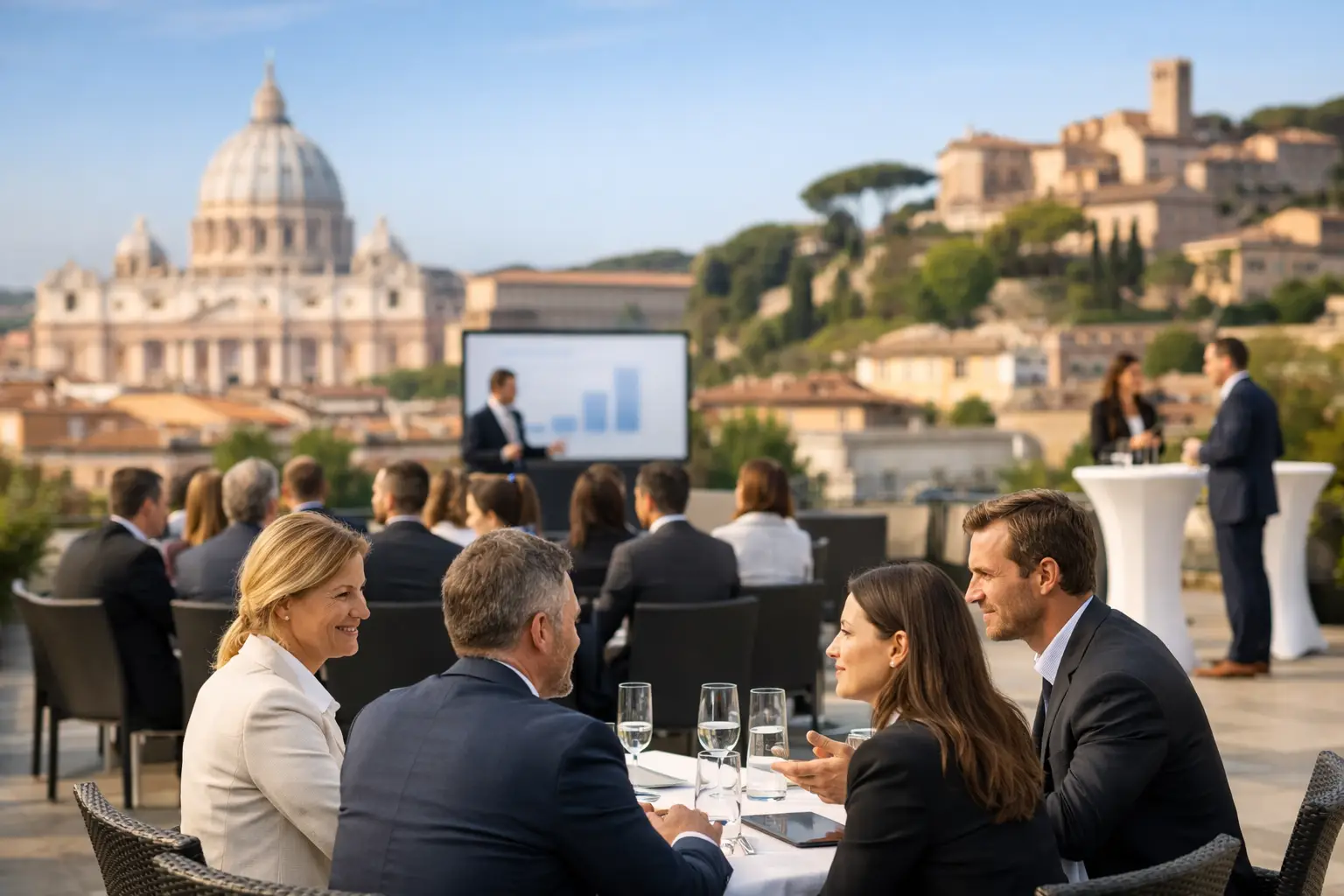
A gala dinner in a Renaissance palazzo can impress every guest in the room. It can also fall apart if load-in timing, coach access, permit windows, and catering flow are treated as afterthoughts. That is the reality of italy MICE events: the setting may be extraordinary, but execution is what protects the experience.
For international agencies and corporate teams, Italy is one of the most rewarding destinations in Europe for meetings, incentives, conferences, and executive gatherings. It offers global air access, strong hospitality infrastructure, respected conference cities, and venues that carry real emotional impact. Yet Italy is not a plug-and-play market. Historic centers come with access restrictions. Peak seasons affect rates and availability. Local supplier quality can vary sharply by region and city. What looks effortless to attendees usually depends on careful local planning long before the first arrival transfer is dispatched.
Why Italy MICE events demand local precision
Italy gives planners range. Rome delivers scale, heritage, and institutional weight. Milan is efficient, modern, and ideal for product launches, fashion-adjacent events, and corporate meetings that need a sharper business tempo. Florence offers intimacy and prestige, often better suited to high-touch executive programs and incentives. Venice creates immediate memorability, but transport planning there is its own discipline.
That variety is part of the appeal, but it is also where risk enters. Each destination has different operating conditions, pricing patterns, union rules, transport realities, and venue limitations. A venue that looks perfect for a plenary session may have strict production hours. A luxury property may suit senior leadership but struggle with larger breakout requirements. A heritage site may be spectacular for dinner but unrealistic for a full conference program.
The best italy MICE events start with a practical question, not a romantic one: what does this program need to achieve, and which Italian setting can support that goal without forcing compromises that show on the day?
Venue strategy matters more than venue beauty
Italy has no shortage of beautiful spaces. The harder question is whether those spaces can function as event environments.
For a conference or multi-day corporate meeting, venue strategy should be built around guest movement, production feasibility, privacy, and timing. This includes registration flow, green room access, staging capacity, ceiling height, acoustic conditions, power availability, service corridors, and how quickly the space can turn between sessions. In a destination known for architectural heritage, planners often face a trade-off between atmosphere and infrastructure. The right choice depends on the event format.
If the objective is executive positioning, stakeholder hospitality, or reward-driven incentive travel, the emotional power of the venue may deserve greater weight. If the objective is content-heavy communication, product education, or a high-volume congress, operational suitability should lead.
That does not mean beauty becomes secondary. It means beauty should be selected with purpose. A modern convention hotel in Milan paired with an off-site dinner in a historic residence often works better than trying to make one venue do everything. In Rome, a large meeting in a well-equipped hotel can be elevated by a closing evening in a museum courtyard or private palace. In Florence, where intimacy is an advantage, a smaller-scale leadership retreat can gain far more value from exclusivity and setting than from raw room count.
Transportation is where control is won or lost
Guests rarely remember a transfer that worked perfectly. They always remember one that did not.
In Italy, transportation planning is not just about moving people from airport to hotel. It is about building reliable timing into a market shaped by traffic patterns, pedestrian zones, water transit, limited coach access, and city-center restrictions. Rome and Milan require careful routing and realistic contingency. Venice requires mastery of boat logistics, baggage handling, and weather sensitivity. Across historic centers, the final stretch to a venue may involve walking routes, staggered arrivals, or smaller vehicle rotations.
This is especially relevant for large groups. A movement plan that works for 30 attendees can fail completely at 300. Arrival windows, multilingual staffing, branded signage, dispatch protocols, backup vehicles, and communication chains all need to be thought through in advance. VIP movement also needs its own logic. Senior stakeholders often require different arrival timing, privacy, and security handling than the main group.
The strongest event programs in Italy do not hide from these realities. They plan around them early and treat transport as part of guest experience, not just event mechanics.
Supplier alignment is not a back-office detail
A strong Italian event is usually the result of quiet coordination between many moving parts: hotels, venues, audiovisual teams, florists, entertainment, caterers, local authorities, transport providers, and on-site staff. The challenge is not simply booking suppliers. It is making sure every supplier is working to the same timeline, standards, and operational assumptions.
This matters because Italy is highly local. A supplier with an excellent reputation in Milan may not be the right fit in Rome. A venue-approved production company may understand the building better than a lower-cost alternative. A caterer may excel in a gala format but underperform for working lunches where speed and consistency matter more than showmanship.
For overseas planners, this is where a trusted in-country partner changes the shape of the project. Decisions become clearer when they are grounded in local experience rather than generic preference. That includes knowing when a venue quote leaves out critical costs, when a turnaround time is too optimistic, or when an itinerary looks elegant on paper but is too ambitious for the city.
Guest experience should feel Italian, not generic
One of the most common mistakes in destination events is spending heavily on travel and venue without making the experience feel meaningfully connected to the destination. Guests know when they could have had essentially the same event anywhere else.
Italy rewards programs that use place with intention. That does not mean filling the schedule with tourist clichés. It means curating moments that feel rooted, polished, and relevant to the audience. A leadership dinner in Florence can draw power from craftsmanship, architecture, and a menu built around regional identity. A Milan product launch can lean into design, contemporary style, and precision. A Rome incentive can use ceremonial settings and historic scale to reinforce importance and recognition.
The key is restraint. Authenticity works best when it is carefully edited. A program should feel distinctively Italian without becoming theatrical or inefficient. Business audiences still need comfort, pacing, and clarity. The destination should enrich the message, not compete with it.
Budget control in Italy requires honest planning
Italy can accommodate different budget levels, but it is not a destination where late-stage compromises are easy to hide. Once prime dates, major hotels, and sought-after venues tighten, the cost of change rises quickly.
This is why early budgeting needs to be realistic. Peak periods in cities such as Milan during major fairs or fashion events can shift hotel pricing dramatically. Venice has structural cost factors that affect transport and operations. Heritage venues may involve staffing, permits, technical restrictions, or installation rules that are not obvious in an initial proposal.
Good budget management is not about choosing the cheapest line item. It is about protecting spend where guests feel it and reducing waste where they do not. Sometimes that means selecting a less famous venue with better operating conditions. Sometimes it means reducing the number of moves in an itinerary so the experience feels calmer and the staffing model is more efficient. Sometimes it means upgrading one signature moment instead of spreading budget too thinly across every touchpoint.
For clients planning from abroad, transparency matters as much as creativity. Confidence comes from understanding what is included, what is variable, and where local conditions may affect cost.
What international planners should expect from an Italy partner
When the stakes are high, destination support should go well beyond recommendations. Planners need local control, fast issue resolution, and disciplined communication from brief to final billing.
That means clear feasibility guidance at proposal stage, not just attractive ideas. It means venue and supplier selection based on fit, not convenience. It means detailed rooming, transfer manifests, production schedules, contingency planning, and on-site management with authority to solve problems quickly. It also means understanding cultural expectations on both sides – translating the needs of international stakeholders into workable local execution.
This is the value of a specialist DMC. A partner such as Love IT DMC is not there to add another layer. The role is to reduce friction, protect standards, and make complex Italy programs feel controlled from the first planning call to the final guest departure.
Italy remains one of the strongest destinations in the world for corporate events because it offers more than scenery. It gives brands and organizations access to places with weight, character, and memory. When those qualities are matched by disciplined logistics and smart local decisions, the event does more than impress. It lands exactly as it should.

