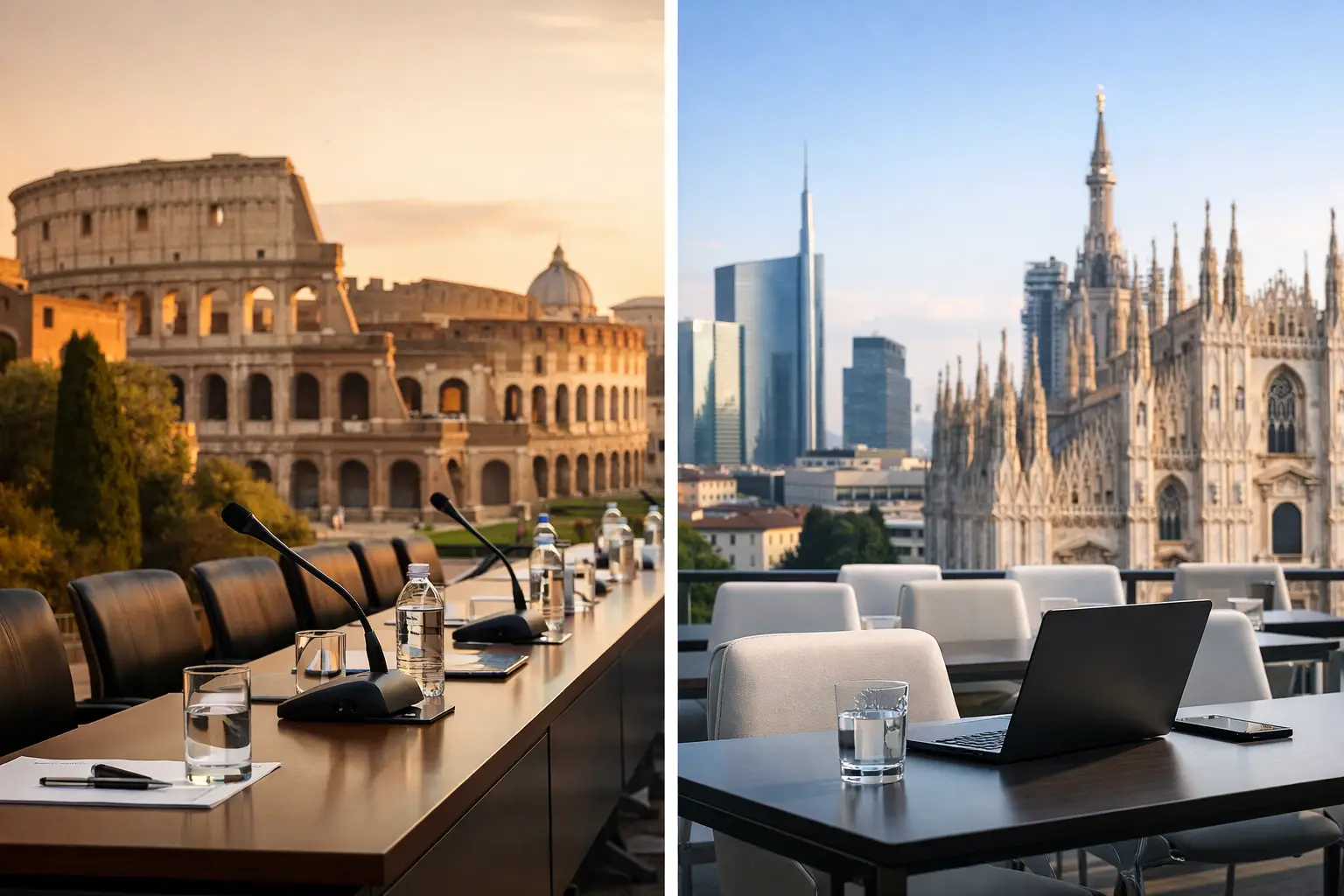
A conference city shapes far more than the meeting agenda. When clients ask about rome vs milan for conferences, they are usually deciding between two very different outcomes: a destination that adds gravitas and emotional impact, or one that delivers speed, business rhythm, and modern efficiency. Both can perform at a high level. The right choice depends on your audience, your program design, and how much complexity you want to build into the guest experience.
Rome vs Milan for conferences: the real decision
Rome and Milan are both proven MICE destinations, but they succeed for different reasons. Rome brings scale, heritage, and a sense of occasion that very few cities in the world can match. Milan offers a sharper corporate profile, faster movement across the city, and a business environment that many international attendees find immediately intuitive.
For event planners, this is not simply a destination question. It is a strategic one. Are you hosting a leadership summit that needs prestige and a memorable social program? Rome has a natural advantage. Are you running a product launch, regional sales meeting, or industry conference where efficiency and commercial energy matter more than spectacle? Milan often makes execution easier.
The strongest choice is usually the city that supports your event objectives with the least friction.
Accessibility and attendee flow
For international arrivals, both cities are well connected, but the attendee journey feels different. Rome has strong long-haul access and broad global recognition, which can help with attendance and destination appeal. For many US and international guests, Rome is an easy city to say yes to. It carries a built-in sense of reward.
Milan, however, often performs better for business travel patterns. It has excellent air access, strong rail infrastructure, and close ties to European corporate networks. If your delegates are arriving from multiple European offices, Milan can be more practical. Travel times within the city also tend to be more predictable, which matters when you are moving speakers, VIPs, and large groups on tight schedules.
This is one of the first trade-offs to consider. Rome may win on emotional pull. Milan often wins on operational tempo.
Venue style and what it says about your brand
Venue selection tends to clarify the rome vs milan for conferences decision very quickly.
Rome is ideal when the venue itself is part of the message. Historic palaces, monumental settings, elegant terraces, and grand institutional spaces create immediate impact. If your stakeholders expect a conference that feels elevated, diplomatic, or culturally distinctive, Rome gives you a rare canvas. It is especially effective for executive gatherings, association congresses, annual meetings, and events where relationship-building is as important as content.
Milan is stronger when brand positioning leans contemporary, international, or design-led. The city offers polished hotels, efficient congress venues, fashion-forward event spaces, and a business aesthetic that feels current rather than ceremonial. For technology, finance, pharmaceutical, and luxury brand events, Milan often aligns naturally with the tone of the program.
Neither is better in absolute terms. Rome communicates legacy and prestige. Milan communicates momentum and modernity.
Logistics on the ground
This is where experienced planners look beyond the postcard image.
Rome can absolutely handle major conferences, but it requires disciplined transport planning. The city is larger, traffic can be slower, and historic districts bring operational constraints that need to be understood early. Load-in windows, coach access, last-mile transfers, and security routing all benefit from local control. When managed properly, Rome delivers beautifully. When underestimated, it can put pressure on timing.
Milan is generally more straightforward. Distances are manageable, road access is easier in many business districts, and the city’s layout tends to support tighter event schedules. If your program includes multiple breakout venues, off-site dinners, sponsor activations, and frequent transfers, Milan can reduce risk.
That does not mean Milan is effortless or Rome is problematic. It means Rome rewards planning depth, while Milan offers more natural ease. For international agencies and corporate teams working against fixed timelines, that distinction matters.
Hotel inventory and delegate comfort
Both cities offer substantial hotel capacity across categories, from luxury properties to efficient business accommodations. The difference is in how that inventory is distributed and how it supports your event flow.
In Rome, hotel selection can be highly rewarding but more fragmented depending on the district and event size. For premium groups, this can work in your favor. You can place senior delegates in iconic hotels and build a program around the city’s atmosphere. For very large groups, room block strategy becomes more important, particularly if you want to minimize transfer times between hotels and venue.
Milan often feels more compact from a conference planning perspective. Business hotels, upscale properties, and meeting-friendly accommodations are easier to align around event hubs. That can simplify rooming logistics, VIP handling, and daily transportation.
If attendee comfort is defined by efficiency, Milan has an edge. If attendee comfort includes destination immersion and a sense of being somewhere exceptional, Rome stands out.
Budget considerations without oversimplifying
Clients often expect a clear winner on cost, but rome vs milan for conferences is rarely that simple.
Rome can appear more expensive in certain premium categories, especially when demand is high and historic venues are involved. Transport costs may also rise if your event footprint is spread across the city. At the same time, Rome offers strong value when the destination itself does part of the work. A well-chosen Roman setting can elevate perception without excessive production spend because the environment already carries atmosphere.
Milan can be more efficient from a logistics standpoint, which helps control labor, transfer, and timing-related costs. However, top-tier venues, premium hotels, and peak-date demand can push budgets up quickly, especially around major trade fairs and fashion periods.
The real budgeting question is not which city is cheaper. It is which city gives your event the best return on experience, message, and operational control.
Social programs and guest engagement
A conference rarely lives or dies by plenary sessions alone. What happens around the core agenda often determines how attendees remember the event.
Rome is exceptionally strong for social impact. Gala dinners in heritage venues, private cultural access, guided evening experiences, and open-air receptions create memorable moments with very little explanation needed. Guests understand immediately that they are part of something special. This is powerful for leadership events, client entertainment, incentive-linked conferences, and programs where emotional resonance matters.
Milan’s advantage is different. The city supports sophisticated networking through design, cuisine, fashion, and contemporary culture. It feels polished, relevant, and urban. For audiences that value trend awareness, innovation, and business energy, Milan can deliver a more fitting backdrop than a purely historic destination.
If your attendees want to be impressed, Rome often wins. If they want to feel current, connected, and efficient, Milan may be the better fit.
Which city works best by event type
Rome is typically the stronger choice for executive meetings, association conferences, annual gatherings, and events where the destination is expected to carry prestige. It is also highly effective when international guests are extending their stay or bringing partners, because the city offers immediate leisure value.
Milan is often the better choice for commercial events, product presentations, corporate summits, regional meetings, and industries that operate at a faster business pace. It suits programs where timing, accessibility, and a contemporary brand environment are central to success.
Some planners assume Rome is for inspiration and Milan is for execution. In practice, both can do both. The difference is which city makes your priorities feel natural rather than forced.
A practical way to decide
If your event brief includes words like prestige, legacy, stakeholder experience, celebration, or cultural distinction, start with Rome. If it includes efficiency, business alignment, speed, regional attendance, or modern brand positioning, start with Milan.
Then test the destination against three practical questions. How easily can attendees arrive and move? Does the venue style reflect the brand you want on stage? And can the city support your agenda without adding avoidable complexity?
That is usually where the answer becomes clear.
For overseas planners, the smartest approach is not choosing the city with the strongest reputation. It is choosing the city that best supports the program you need to deliver, the audience you need to satisfy, and the level of control you need on the ground. With the right local partner, both cities can host exceptional conferences in Italy. The best results come from matching the destination to the brief with precision, not assumption.

