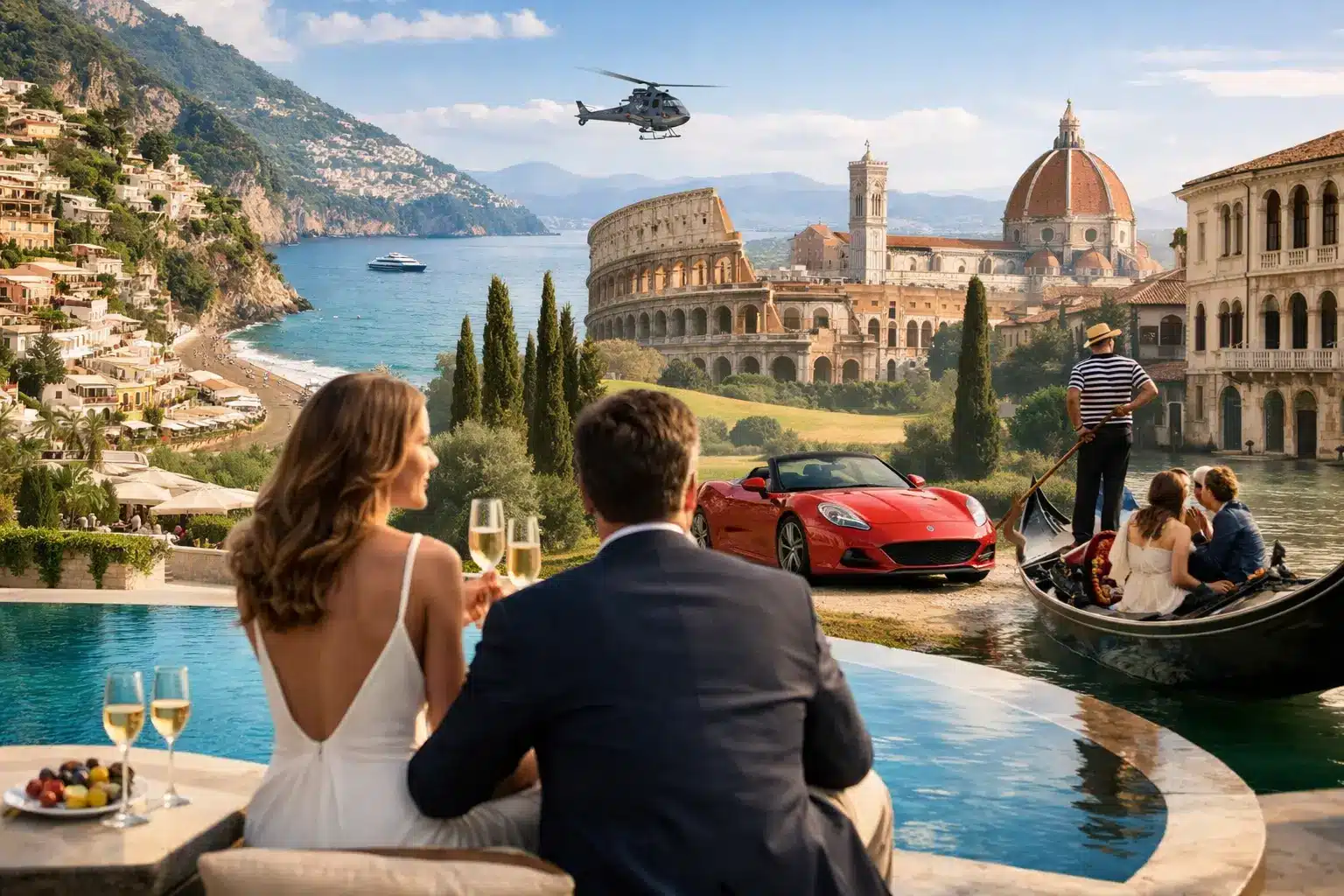
A private after-hours visit to the Vatican Museums, followed by dinner beneath frescoed ceilings, is no longer enough on its own. For high-performing teams, luxury must feel personal, considered, and impossible to replicate. The luxury incentive travel trends shaping corporate programs reflect a higher standard: guests expect emotional impact, while organizers require flawless timing, reliable access, and clear control of every moving part.
Italy remains exceptionally well suited to this moment. Its value is not simply its catalog of famous places. It lies in the ability to bring heritage, craftsmanship, gastronomy, landscape, and contemporary design into one coherent reward experience. The most successful programs make that experience feel effortless to the guest, even when the operational work behind it is highly complex.
Luxury Incentive Travel Trends That Matter Now
Private access is becoming the baseline
Exclusivity has shifted from a luxury extra to a central design principle. Senior achievers and top sales performers travel frequently, often to destinations they already know. A standard city tour, even in Rome or Florence, does not carry the same reward value as access arranged around a specific moment, person, or place.
This is why private openings, closed-door cultural encounters, and use of heritage venues are defining premium incentive programs. A gallery can become the setting for an intimate reception before public hours. A historic palazzo can host a brand dinner with carefully designed lighting and entertainment. A private workshop with a master artisan can turn an admired Italian tradition into a hands-on achievement story.
Private access must be matched with operational realism. Many historic sites have restrictions on guest numbers, production equipment, security, catering, and arrival times. The right experience is not the most ambitious idea on paper. It is the one that can be delivered confidently, with permissions in place and a guest flow that protects the sense of occasion.
Hyper-personalization is replacing one-size-fits-all luxury
Incentive groups are increasingly diverse in age, travel style, dietary needs, and expectations. A single premium activity for every attendee can leave some guests inspired and others disengaged. The stronger approach is a shared program with meaningful choice.
For example, a Florence itinerary may offer parallel afternoon experiences: a design-focused visit, a culinary masterclass, a private artisan encounter, or a wellness-led experience in the countryside. All options should meet the same standard of hospitality and storytelling, then reconnect the group for a common evening celebration.
Personalization also appears in smaller details. Welcome amenities can reference guest preferences rather than rely on generic gifting. Dining can account for cultural and dietary requirements without separating guests into an afterthought. Transportation can be structured around flight patterns and accessibility needs, not simply around the easiest supplier schedule.
There is a practical limit. Too many choices can create a complicated registration process, fragmented transport, and uneven guest numbers across activities. The solution is careful curation: enough options to make guests feel recognized, but not so many that the program loses its rhythm or operational control.
Purpose is part of the reward
Luxury incentive travel is becoming more conscious without becoming less celebratory. Corporate teams want to know that the program respects the destination, supports local communities, and avoids unnecessary waste. For many global brands, this is both a values issue and an internal reporting requirement.
In Italy, purposeful design can be highly authentic. A farm-to-table dinner can spotlight regional producers. An artisan-led activity can support independent makers and preserve traditional skills. Menus can follow seasonality and regional sourcing. A thoughtful itinerary can reduce needless transfers by grouping experiences geographically, improving both sustainability and the guest experience.
Sustainability should not be presented as a compromise. A smaller, locally sourced menu served in a remarkable venue can feel more luxurious than an excessive production with little connection to place. What matters is that choices are credible, measured, and integrated into the event narrative rather than added as a final paragraph in the proposal.
Well-being is now designed into the agenda
High-value incentive trips are still energetic, social, and celebratory. Yet guests no longer equate luxury with an overloaded schedule. They appreciate room to absorb a destination, recover from long-haul travel, and choose their level of participation.
This is changing itinerary design. Programs are allowing more time between arrivals and headline events, incorporating spa or outdoor experiences, and avoiding early starts after gala evenings. In destinations such as Lake Como, Tuscany, the Amalfi Coast, and the Dolomites, the landscape itself becomes part of the reward. In urban settings, well-being may mean a slower morning, a private rooftop breakfast, or free time supported by clear local recommendations and on-call assistance.
The goal is not to make an incentive feel like a retreat. It is to recognize that rested guests are more present, more social, and more likely to remember the company’s investment in them positively.
The New Standard Is a Strong Sense of Place
Luxury is increasingly judged by authenticity. International groups do not need Italy to imitate a generic five-star experience available in any global capital. They want an experience that could only happen here.
That requires disciplined destination storytelling. In Venice, the program might focus on the relationship between water, craftsmanship, and trade rather than a checklist of landmarks. In Milan, it may connect design, fashion, and innovation through contemporary spaces and private creative encounters. In Rome, the contrast between imperial heritage and modern Italian culture can give a corporate celebration real depth.
Food remains one of the most powerful ways to create this connection, but it must move beyond predictable formats. A regional menu has greater impact when guests understand the producer, technique, or local tradition behind it. Entertainment should be equally specific. An exceptional performance in a heritage setting can be memorable; a generic act placed in the same room can dilute the atmosphere.
For planners, this calls for a local partner that knows which concepts are genuinely distinctive and which have become overused. The difference is often invisible during the sourcing stage but immediately clear once guests arrive.
Technology Should Reduce Friction, Not Replace Hospitality
Digital tools are improving incentive travel, particularly for international groups arriving across multiple flights and time zones. Mobile itineraries, real-time transport updates, digital check-in, and preference capture can reduce administrative pressure for both planners and guests.
However, technology should remain discreet. A guest should not need to navigate a complex app to find a host at the airport or understand where to go next. The best programs combine digital clarity with visible, multilingual personnel at the moments that matter: arrivals, hotel check-in, transfers, venue entry, and departures.
Production technology also has a role. Immersive lighting, projection, sound design, and tailored content can transform historic settings into compelling brand environments. Yet heritage venues demand restraint. The technology should enhance the space and the message, never compete with them or compromise the guest experience.
Operational Precision Is Part of the Luxury Experience
The most consequential luxury incentive travel trends are often discussed in terms of design. But for agency and corporate teams, execution remains the real measure of quality. A private dinner loses its magic when guests wait outside in the rain. A beautiful venue cannot compensate for confusing arrivals, delayed luggage, or an uncoordinated departure schedule.
Italy rewards meticulous planning because its most compelling settings are rarely built for large modern groups. Historic centers have access limitations. Airports and rail stations require precise transfer management. Heritage venues may involve narrow entrances, loading restrictions, supplier curfews, and strict safety requirements. These are manageable conditions, but they need to be addressed early, not discovered during final production.
A strong destination management approach begins with the brief: attendee profile, business objective, group size, budget, travel pattern, and desired emotional outcome. From there, each choice should be tested against timing, permissions, contingency planning, and service consistency. Love IT DMC applies this local operational discipline so international planners can focus on their stakeholders rather than solving issues from another time zone.
The most memorable incentive programs do not feel over-engineered. Guests remember the warmth of the welcome, the rare access, the beauty of the setting, and the feeling that every detail anticipated their needs. That is the standard worth designing for: an Italian reward experience with genuine character, delivered with complete control.

