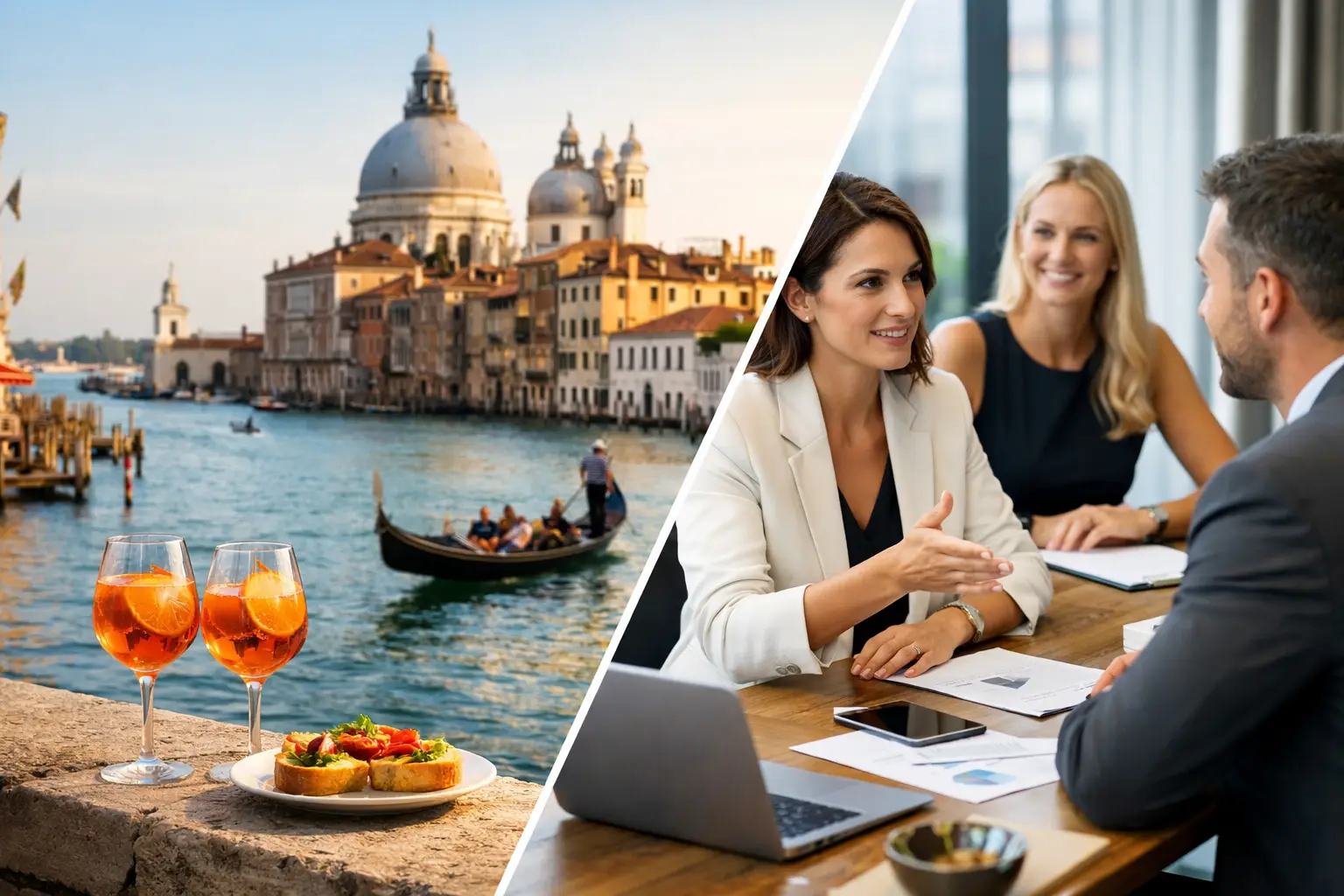
A venue that looks perfect on a mood board can fail a program in real life if guest flow is wrong, permits are delayed, or transfers take twice as long as expected. That is where the italy dmc vs event agency question becomes more than a matter of terminology. For international planners bringing groups into Rome, Milan, Florence, Venice, or the Amalfi Coast, the distinction affects budget control, operational risk, and the guest experience from arrival to final departure.
Italy DMC vs event agency: the core difference
An event agency usually leads brand strategy, creative direction, attendee engagement, and the overall event concept. A destination management company, or DMC, leads local execution within the destination. In Italy, that means supplier contracting, venue sourcing, transportation logistics, hospitality staffing, technical coordination on the ground, local compliance, and the countless operational details that determine whether a program runs on time.
The difference is not about which partner is better. It is about scope. An event agency often owns the broader event vision. An Italy DMC owns what it takes to make that vision work in Italy, within the realities of local infrastructure, regional supplier networks, and destination-specific rules.
For many overseas clients, the cleanest model is not one or the other. It is an event agency and an Italy DMC working in tandem, each responsible for a different layer of the project.
What an event agency typically handles
If your priority is campaign thinking, messaging, audience design, or a strong creative platform that ties the event back to a product launch or company narrative, an event agency is usually the starting point. Agencies are often brought in early to shape the event purpose, attendee journey, content architecture, production identity, and stakeholder communications.
That may include stage concepts, registration experience, keynote flow, branded environments, sponsorship integration, and executive alignment. For global brands and corporate marketing teams, this strategic layer matters. A well-conceived conference in Milan should not feel disconnected from the company goals behind it.
Some agencies also manage production, budgeting, and supplier selection directly. The question is how deep their destination knowledge goes. An agency may be exceptional at building the experience while still needing a trusted in-country operator to execute it properly in Italy.
What an Italy DMC typically handles
An Italy DMC is built around destination expertise. That expertise is not limited to knowing which hotel is fashionable this season. It is operational knowledge – which routes become congested during a citywide congress, which heritage venue has strict load-in timings, which gala location can actually accommodate a complex dinner setup without compromising service standards, and which local partner will solve a problem quickly when conditions change.
A DMC typically manages venue research and negotiation, room blocks, airport meet-and-greet, transportation schedules, off-site events, restaurant buyouts, entertainment, staffing, gifting, permit coordination, multilingual support, and local supplier management. For incentives and executive programs, the DMC also shapes destination experiences that feel distinctly Italian while still supporting the event brief.
This local control matters even more with larger groups. Moving 30 senior leaders to a private dinner is one thing. Moving 800 attendees across multiple hotels, breakout venues, and evening events in a historic city center is another. Italy rewards ambition, but it also requires precision.
Why the distinction matters more in Italy
Italy is one of the most compelling event destinations in the world because it combines infrastructure with atmosphere. You can host a conference in Milan, a leadership retreat in Tuscany, a gala in a Roman palace, or an incentive finale overlooking the Venetian lagoon. The opportunity is extraordinary. So is the margin for error if the operation is not grounded in local reality.
Italian destinations vary widely in access, timing, supplier culture, and venue restrictions. A plan that feels straightforward on paper can become complicated when it meets protected historic sites, limited vehicle access, seasonal pressure, or regional logistics. Not every challenge is dramatic. Often it is a series of small frictions that, if unmanaged, erode the attendee experience and consume the organizer’s time.
This is why the italy dmc vs event agency decision often becomes a capacity question. Who is best placed to control local complexity while preserving the quality of the program? If the answer is unclear, responsibilities blur, and that is when timelines, budgets, and accountability start to slip.
When an event agency is enough
There are cases where an event agency can manage the full program without a separate DMC. This tends to work best when the event is simple, the group is small, the destination is operationally straightforward, or the agency has a strong and proven local network in Italy.
For example, a short executive meeting at a major international hotel in Rome with limited off-site activity may not require a standalone destination partner if the agency already has dependable local suppliers and internal logistics capability. The same can be true for repeat programs in a city the agency knows well.
But this model depends on depth, not confidence alone. Italy is not a destination where assumptions travel well from one city to another.
When an Italy DMC is the smarter choice
An Italy DMC becomes particularly valuable when the event involves multiple venues, large attendee numbers, incentive components, VIP movement, heritage properties, or a destination the client does not know intimately. It is also the stronger choice when procurement needs transparent local costing or when the internal team wants one accountable partner on the ground from first site inspection through final guest departure.
A DMC is not only there to troubleshoot. A good one improves planning decisions before problems appear. That might mean advising against a beautiful venue with difficult coach access, reworking transfer schedules around local traffic patterns, or securing better terms with trusted suppliers because of long-standing relationships.
This is where value often becomes visible. Not in dramatic rescue stories, but in the quiet discipline of getting details right early.
The strongest model is often both
For international agencies and corporate teams, the most effective structure is often shared responsibility. The agency leads strategy, creative, and stakeholder management. The Italy DMC leads local planning and execution. Each partner works within a clear scope, and the client benefits from both high-level event thinking and destination control.
This model is especially effective for conferences, product launches, incentive travel, and leadership events where brand expectations are high and logistics are layered. It also protects quality. Creative ambition can remain intact because the destination plan is built around what is truly achievable.
When this partnership works well, the attendee never sees the complexity. They see a polished arrival, a dinner that starts on time, a conference flow that feels effortless, and a program that feels unmistakably Italian without losing corporate precision.
How to decide between an Italy DMC and an event agency
Start with the real brief, not the job title. If you need help defining the event, shaping the message, and aligning internal stakeholders, begin with an agency. If you already know what the event needs to achieve and the bigger challenge is how to deliver it in Italy, a DMC may be the more critical first move.
Then assess complexity. Consider attendee numbers, destination spread, transfer patterns, venue type, off-site events, executive expectations, and how much local decision-making will be required in the final weeks. The more moving parts there are, the more valuable in-country operational leadership becomes.
Finally, look at accountability. Ask who owns supplier coordination, who handles changes on site, who manages local staff, and who makes fast decisions when timing shifts. The right answer is not always a single partner, but it should always be explicit.
A specialist such as Love IT DMC sits precisely in that operational space – translating event objectives into real-world delivery across Italy with local authority, hospitality standards, and control over the details that shape guest perception.
The wrong choice is usually a scope mismatch
Most event problems do not come from hiring the wrong type of company in absolute terms. They come from hiring a partner whose scope does not match the event’s demands. An agency asked to carry heavy destination operations without the right local infrastructure will feel stretched. A DMC asked to create a global brand platform without strategic direction will be working outside its natural role.
The better decision is the one that reflects the event honestly. Italy can host extraordinary business events, but extraordinary does not happen by accident. It comes from pairing creative intent with local command, and giving each responsibility to the partner best equipped to carry it.
If you are planning in Italy, the question is not whether you need expertise. It is which kind of expertise needs to lead, and where local execution needs to take over so the experience feels as polished in person as it did in the original brief.

