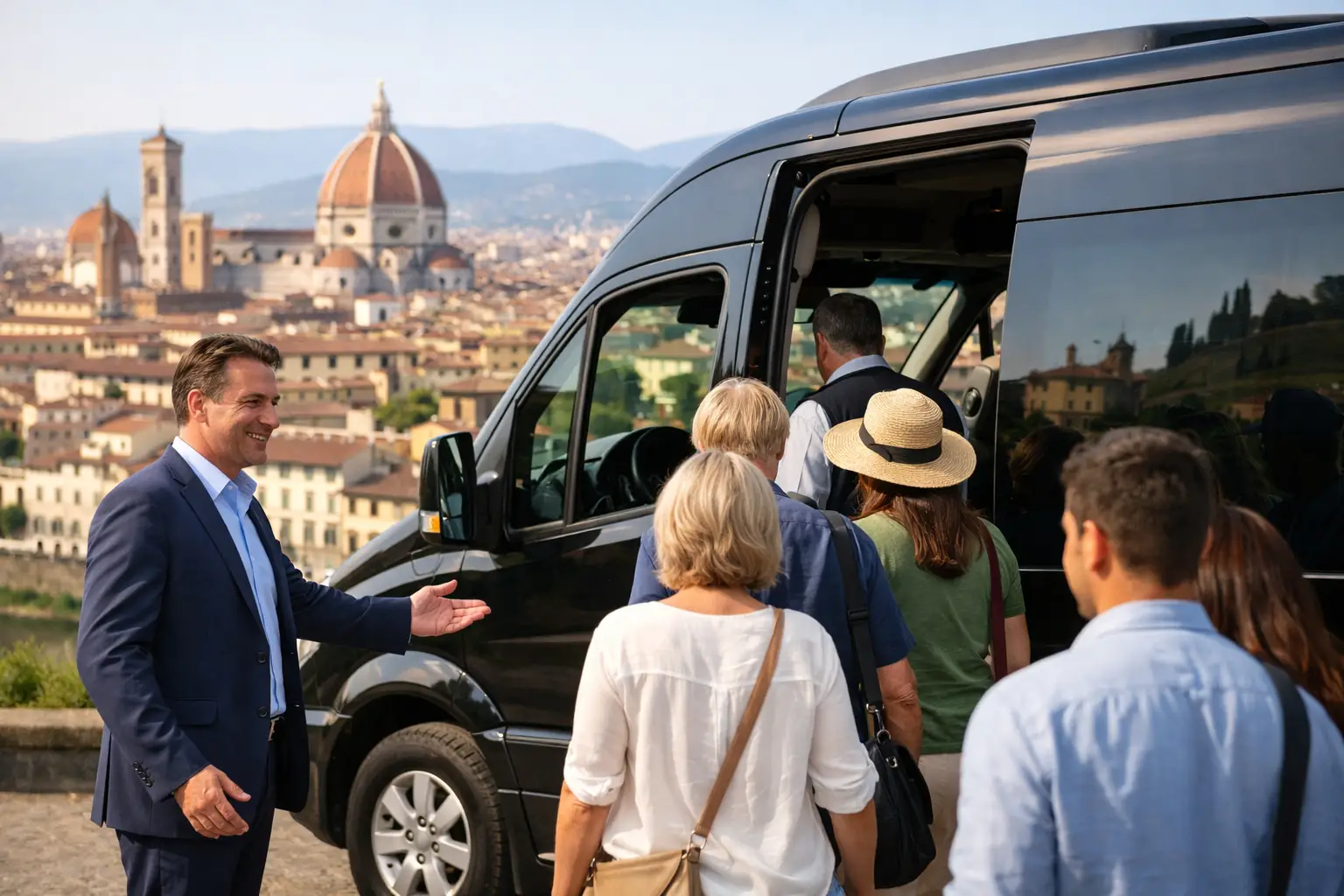
A 300-person arrival at Rome Fiumicino can look effortless to guests: a welcome host, clear signage, coaches ready at the curb, and a direct journey to the hotel. Behind that moment sits a detailed operational plan. Knowing how to coordinate group transfers in Italy means managing far more than vehicles. It requires control of flight patterns, traffic restrictions, luggage volumes, hotel access, driver regulations, and the pace at which an international group actually moves.
For corporate meetings, incentives, conferences, and executive programs, transportation is often the first live expression of the event. If it feels confused, the pressure follows guests into registration, meetings, and dinner. If it is calm and well managed, Italy begins to feel as it should: welcoming, polished, and full of possibility.
Start With the Movement Plan, Not the Vehicle Count
The first question is not how many coaches are needed. It is how the group will move across the full program. Begin with an attendee movement map that covers every arrival point, hotel, venue, restaurant, off-site activity, and departure window. This creates a realistic picture of where transfers intersect with the event agenda.
A single-city conference in Milan may need airport arrivals, hotel-to-congress-center shuttles, and gala dinner rotations. A multi-city incentive across Florence, Tuscany, and Rome has different demands: luggage handling, timed coach departures, motorway access, rest stops, and arrival slots at each property. Treat each movement as part of one connected operation rather than a series of individual rides.
Participant data should be collected early and updated continuously. At a minimum, planners need flight numbers, arrival and departure times, terminals, guest mobile numbers, hotel assignments, mobility requirements, and luggage expectations. Business-class travelers arriving with cabin bags create a different loading pattern from an incentive group carrying checked luggage for a five-night stay.
Build Transfer Waves Around Real Arrival Patterns
Flight schedules rarely cooperate with an idealized program. A group may land across six hours, with late arrivals caused by connections through Frankfurt, London, Paris, or Dubai. Trying to place everyone on one large transfer often results in lengthy waits and an underwhelming first impression.
Instead, create arrival waves based on practical thresholds. Guests landing within a defined window can share a coach, while VIPs, senior executives, speakers, or guests with tightly scheduled commitments may require private vehicles. The right approach depends on budget, the airport, and the expected guest experience. A premium incentive may justify more frequent departures. A large congress may prioritize efficient coach loads, provided waiting times remain clearly communicated and reasonable.
Each wave needs a named owner, a vehicle allocation, a meeting point, an expected departure time, and a contingency rule. For example, a coach might depart when it reaches a specified guest count or at a fixed time, whichever comes first. This prevents on-site teams from making inconsistent decisions under pressure.
How to Coordinate Group Transfers in Italy by City
Italy’s major destinations require distinct transportation strategies. Local knowledge is not a luxury here. It is a practical necessity.
Rome: Plan for Distance, Traffic, and Restrictions
Rome’s airports sit outside the historic center, and transfer times can vary substantially by time of day. Hotel access may involve narrow streets, limited stopping space, and regulated traffic zones. A coach cannot always pull directly in front of a property near the Spanish Steps, Piazza Navona, or the Pantheon.
Build in realistic timing and identify the final guest walk from vehicle drop-off to hotel entrance. For high-profile evenings at historic venues, confirm permits, loading areas, and coach holding positions well ahead of the event. The city’s grandeur is part of the experience, but its street layout demands careful operational discipline.
Milan: Match Transport to a Fast Business Rhythm
Milan is efficient, but major trade fairs, fashion events, and citywide congresses can quickly tighten vehicle availability and affect travel times. Linate and Malpensa serve different arrival profiles, and the distance between them matters when consolidating flights.
For meetings around convention areas or central luxury hotels, precise dispatching is often more effective than keeping vehicles idle on site. A transport control desk can adjust departure timing as sessions finish, avoiding a line of coaches that obstructs access or leaves guests waiting at the curb.
Florence and Venice: Respect the Last Mile
Florence’s historic center has strict access conditions and limited space for large vehicles. Often, the correct plan includes a controlled coach drop, a short guided walk, or smaller authorized vehicles for the final approach. This should be communicated before guests arrive, not discovered with luggage in hand.
Venice requires an entirely different mindset. Water transfers, land vehicles, porters, boat capacity, tides, hotel docks, and walking routes all affect the journey. A beautifully coordinated Venetian arrival relies on timed handoffs between each mode of transport. There is no room for assumptions about dock availability or luggage movement.
Select Suppliers for Reliability, Not Just Rate
A low transportation rate can become expensive when it excludes parking, permits, night supplements, luggage trailers, waiting time, or last-minute changes. Request transparent proposals that define vehicle type, passenger capacity, luggage capacity, driver hours, cancellation conditions, and any local access charges.
Vehicle capacity should never be assessed by seat count alone. A 50-seat coach may not suit 50 international attendees with large suitcases. If the route includes airport collection, multi-day luggage, or equipment cases, use a luggage trailer or reduce passenger loads. The same principle applies to executive sedans and minivans: comfort, bags, and road access must all be considered together.
Supplier selection also depends on operational depth. Ask whether the provider has dispatch support, replacement vehicles, multilingual drivers or hosts, and experience at the selected airport or venue. For major programs, a local transportation partner should be able to respond to a flight diversion, delayed baggage, or a sudden schedule change without placing the burden back on the event planner.
Make the Guest Journey Easy to Follow
Even a perfectly designed route fails if guests cannot identify their host or understand where to go. Arrival instructions should be concise, visually clear, and delivered before departure. Include the airport meeting point, recognizable signage, host contact details, expected transfer duration, and what to do if a flight is delayed.
At the airport, hosts should work from live arrival data rather than printed schedules alone. Flight tracking allows the team to adapt to early landings, gate changes, and delays. It also helps avoid an avoidable frustration: a guest arriving at the meeting point before the host has been repositioned.
For large groups, organize guests by hotel, transfer wave, or color-coded identifier. Avoid complicated instructions that ask tired travelers to interpret multiple versions of the same plan. The best guest communication answers three immediate questions: Where do I go? Who do I find? When do I leave?
Protect the Agenda With Contingencies
Italian transport operations are influenced by factors no itinerary can fully control: flight delays, city demonstrations, road closures, rail disruptions, adverse weather, or congestion around a major event. The answer is not to overpromise. It is to prepare alternatives before they are needed.
For each critical movement, establish a backup route, a reserve vehicle strategy, and a decision point for switching plans. A gala dinner in a villa outside Florence may require staggered coach arrivals to protect the welcome reception. An evening departure in Rome may need an earlier vehicle call if road conditions worsen. For VIP guests, a standby sedan can protect a keynote speaker’s arrival without disrupting the wider coach schedule.
Communication protocols matter as much as backup vehicles. Decide who can authorize changes, who informs guests, and who updates the venue team. A single operational channel prevents contradictory instructions and keeps the client informed with facts rather than speculation.
Coordinate Transfers With the Entire Event Team
Transportation cannot operate in isolation. Registration teams need accurate arrival forecasts. Hotels need rooming lists and luggage arrival times. Venues need coach manifests, access details, and guest drop-off schedules. Restaurant teams need to know if an off-site dinner wave is running 20 minutes late.
A detailed transport run sheet turns these dependencies into controlled actions. It should identify every movement, vehicle, driver or supplier contact, host, guest count, route, timing, venue contact, and contingency note. On complex programs, a live control room or dedicated transport manager is equally valuable, especially when arrivals and departures overlap.
This is where an experienced Italy-based DMC adds meaningful control. Love IT DMC coordinates transportation within the broader event operation, connecting airport welcomes, hotel logistics, venues, and destination experiences into one accountable plan. The goal is not simply to move people. It is to preserve the rhythm and quality of the entire program.
Measure the Details Guests Remember
After the program, review more than whether every vehicle arrived. Look at actual versus planned departure times, airport waiting periods, vehicle occupancy, baggage issues, route deviations, and guest feedback. These details reveal whether the transfer plan was merely functional or genuinely well judged.
The most successful group transfers in Italy give guests confidence from the moment they land. They feel looked after without feeling managed, and they arrive ready for the experience ahead. That sense of ease is built well before the first coach door opens.

