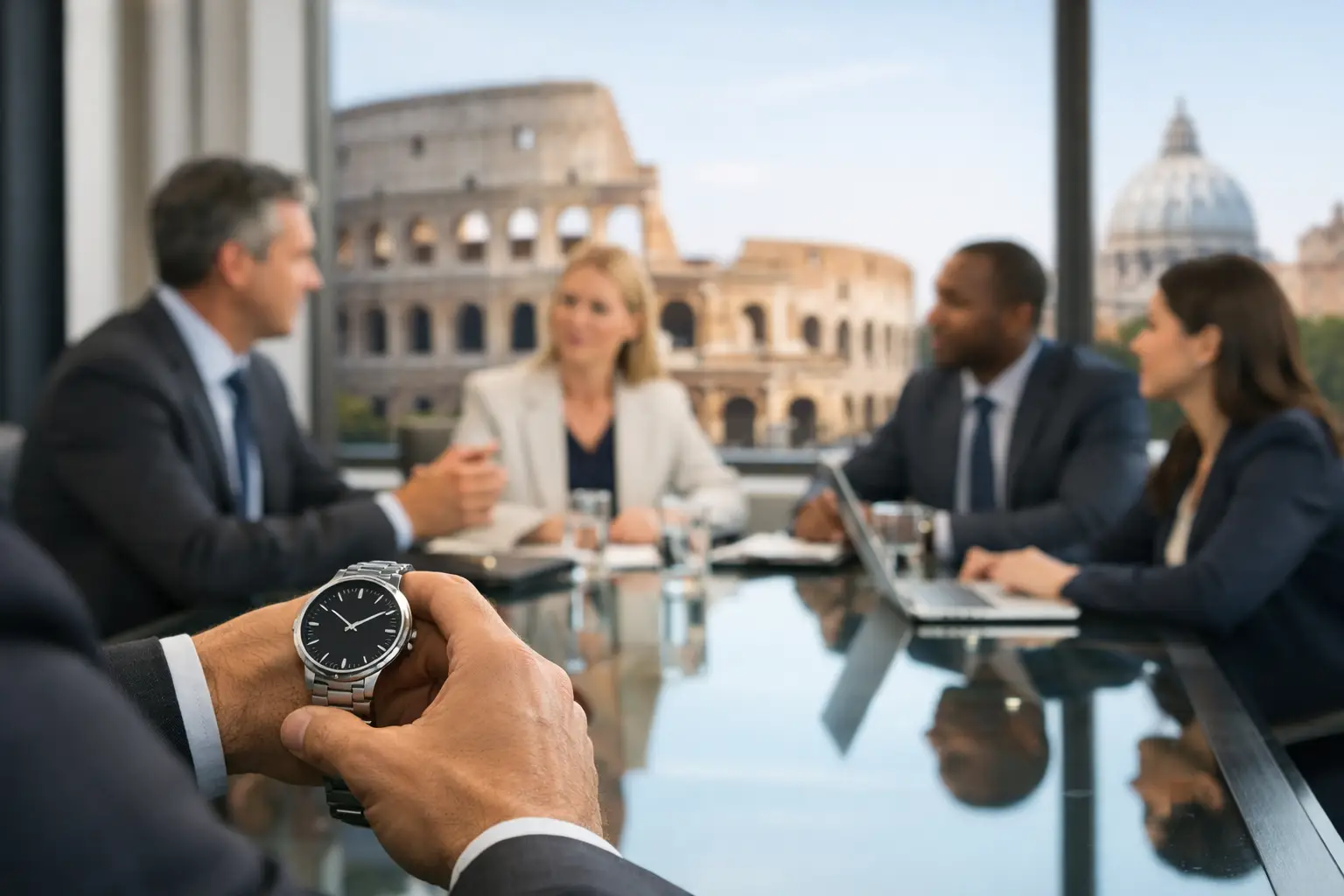
A board meeting beneath Renaissance frescoes, an awards dinner in a private palazzo, or a product launch framed by the city’s ancient skyline can give an event immediate distinction. But corporate events in Rome are not successful simply because the destination is extraordinary. They succeed when venue character, guest movement, security, timing, and brand objectives are treated as one coordinated operation.
For international agencies and corporate teams, Rome offers rare range. It can host an executive retreat with quiet discretion, a congress with complex delegate flows, or an incentive program that feels unmistakably Italian without falling into cliché. The challenge is knowing where creative ambition ends and operational reality begins. That is where local planning expertise has its greatest value.
Why Rome Works for High-Impact Corporate Events
Rome is not a convention destination with a single business district and a predictable event formula. Its strength lies in contrast. Contemporary hotels and purpose-built congress centers sit alongside historic residences, museums, former industrial spaces, rooftop terraces, gardens, and private cultural institutions. This gives organizers room to match the environment to the message.
A financial leadership summit may require a central hotel with strong meeting infrastructure and confidential breakout space. A luxury brand may need a heritage venue where the arrival alone creates anticipation. A global sales conference may combine a large general session with smaller neighborhood-based dinners that make a substantial group feel personally hosted.
The city is also well positioned for international attendance. Rome’s airport connections, high-speed rail links, and broad hotel inventory support programs involving guests from multiple markets. Yet accessibility should not be confused with simplicity. Rome rewards careful planning because traffic patterns, restricted-access areas, and the physical character of historic venues can affect every part of the guest experience.
Corporate Events in Rome Need an Operational Plan First
The most memorable settings in Rome often require the most disciplined production. A centuries-old palazzo may have limited load-in access. A museum event may need detailed protection measures and specific timing for installation. A dinner in a courtyard may be magnificent in early autumn but calls for a credible weather contingency plan.
The right process starts with a practical event brief: attendee profile, meeting objectives, arrival patterns, production needs, dietary expectations, security level, brand guidelines, and budget parameters. These details determine whether a venue is genuinely suitable, rather than merely impressive in photographs.
Venue sourcing should therefore assess more than capacity. It must consider ceiling height, power availability, Wi-Fi performance, accessible entrances, backstage space, vehicle access, noise restrictions, permits, and the journey between the hotel and the event location. For a group of 250, a room that technically holds 250 is rarely the right answer if the registration area, pre-function space, or dining flow is constrained.
This is especially relevant for international planners working from abroad. An on-the-ground inspection can reveal issues that floor plans do not show: a narrow entrance, a long walk from coach drop-off, uneven paving, or a local restriction that changes the timing of entertainment. Anticipating these details protects the client’s schedule and the attendee’s perception of quality.
Start With the Guest Journey, Not the Gala Dinner
A gala venue may become the visual centerpiece of the program, but guests judge an event from the moment they land. Airport welcomes, luggage handling, hotel check-in, credential collection, transfers, and the first briefing all shape confidence in the program.
In Rome, transportation planning deserves early attention. The city’s historic center is compelling precisely because it was not designed for modern vehicle traffic. Coaches may need to use designated drop-off points, while smaller vehicles are better suited to certain central areas. Delegates may need staggered departures, walking hosts, or a carefully designed arrival sequence to avoid queues at a venue entrance.
The best approach depends on group size and program design. A single large coach convoy can be efficient for a congress moving between a hotel and a conference center. For an executive event in the historic center, a fleet of sedans or minivans may provide more control and a more appropriate level of service. Neither solution is universally better. The destination, the schedule, and the expectations of the audience should decide.
A strong local DMC also coordinates the less visible elements: multilingual hosts, dispatch communication, route checks, contingency vehicles, guest assistance, and real-time adjustment when flights are delayed or city conditions change. These are the details that allow the program to feel composed even when circumstances are not.
Choose Venues That Serve the Brand Story
Rome has enough iconic spaces to tempt organizers into selecting a venue based on prestige alone. A better question is whether the location advances the event’s purpose.
For a leadership meeting, discretion and concentration may matter more than spectacle. A refined private residence or an exclusive hotel salon can create the right setting for strategic discussion. For a recognition event, the atmosphere of a historic venue can reinforce themes of achievement, legacy, or excellence. For an automotive, fashion, technology, or hospitality brand, a contemporary space with architectural clarity may allow the product and visual identity to lead.
The most effective programs balance heritage with relevance. A dinner can feature regional cuisine and live Italian music without becoming a generic performance of Italy. A guided cultural moment can be private, informed, and concise, rather than a long interruption in a business agenda. Guests should feel they have experienced Rome with privileged access, not been moved through a checklist of landmarks.
This is where supplier relationships matter. Access to sought-after venues, trusted production teams, skilled caterers, and experienced entertainment partners is valuable only when each component is selected for the brief. Love IT DMC approaches these decisions through both creative fit and operational accountability, ensuring that the destination experience supports the event rather than distracting from it.
Build Time Into the Program Where It Counts
Rome has a natural ability to make guests pause. That is an advantage for incentive travel and client hospitality, but dense agendas can undermine it. A program that tries to cover too much territory often produces rushed transfers, late arrivals, and guests who remember the traffic more than the experience.
Effective scheduling allows for the city’s rhythms. It gives delegates enough time to refresh after arrival, avoids crossing the center unnecessarily, and groups activities by area whenever possible. If a morning meeting ends near Piazza Navona, an afternoon cultural activity and evening dinner nearby may be more valuable than sending the group across the city for another famous address.
Seasonality also affects the schedule. Spring and fall offer excellent conditions but high demand for premium hotels and venues. Summer can be appealing for evening events and outdoor programming, although heat requires thoughtful transfer timing and hydration planning. Winter often creates opportunities for more favorable availability and a quieter, more exclusive feel, particularly for indoor meetings and festive gatherings.
Production, Protocol, and Contingency Management
For major corporate events, the visible experience rests on invisible preparation. Technical production must account for venue acoustics, lighting limitations, internet requirements, branding rules, rehearsal windows, and backup equipment. Registration teams need accurate attendee data, clear escalation procedures, and a plan for late additions or VIP arrivals.
Protocol becomes particularly important for executive meetings, government-adjacent events, press activity, and international stakeholder programs. Security coordination, private entrances, controlled access, confidentiality, and precise hosting standards should be established well before guests arrive. A premium event does not need excessive formality, but it does need consistency.
Contingency planning is equally essential. Outdoor plans require credible alternatives, not a vague promise to move indoors. Transportation plans need buffers and live communication. Catering teams should be prepared for dietary changes, while production schedules should allow time for venue approvals and technical testing. The goal is not to make the event feel overmanaged. It is to make every change look intentional.
Measure What the Destination Delivered
A Rome program should be evaluated against more than attendee satisfaction. For a sales meeting, did the setting improve participation and energy? For an incentive, did guests feel recognized in a way that aligned with company culture? For a product launch, did the venue create content, conversation, and brand recall without complicating media operations?
Post-event feedback, supplier debriefs, budget reconciliation, and operational reporting turn a successful event into useful intelligence for the next one. They also help internal stakeholders demonstrate the value of investing in a destination experience rather than a standard meeting format.
Rome offers the grandeur. The work is in translating that grandeur into a program that moves with precision, feels authentic to the brand, and gives every guest a reason to remember why they were there. Start with the business objective, then let the city provide the setting it deserves.

