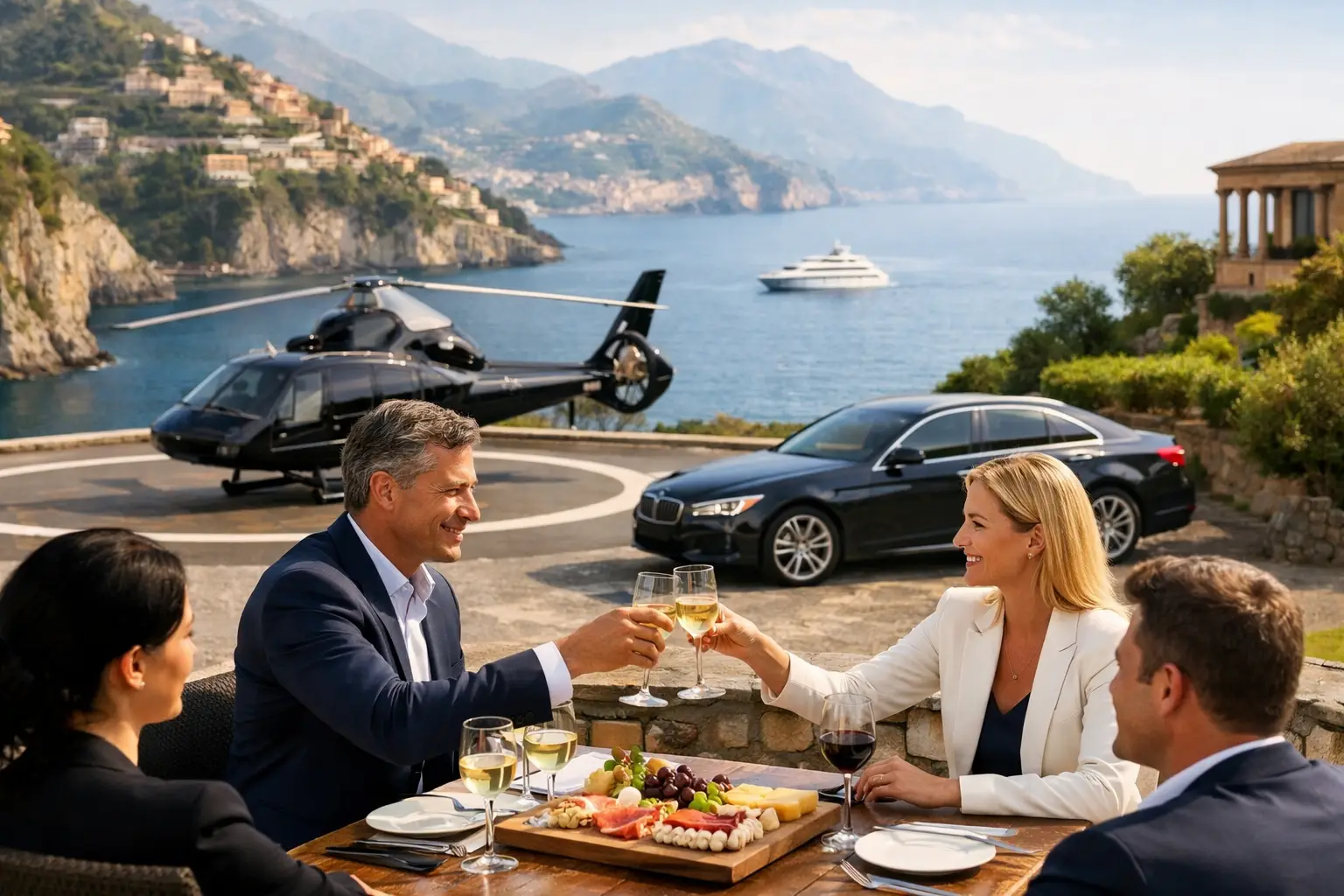
When a leadership team lands in Italy, the bar is rarely just comfort. The brief is usually sharper than that – impress senior stakeholders, protect the schedule, reflect the brand, and make the destination feel exceptional without losing operational control. That is what separates standard VIP travel from the best luxury corporate experiences Italy can deliver.
For agencies and corporate planners, luxury in Italy is not simply a five-star hotel and a scenic dinner. It is access, timing, privacy, and local judgment. It is knowing which palace can actually host a seated dinner for 180 guests without bottlenecks, which vineyard can receive executive transfers by helicopter or luxury coach without compromising guest flow, and which historic venue looks magnificent in photos but becomes difficult once production, permits, and service standards are considered.
What defines the best luxury corporate experiences in Italy
The strongest programs share one trait: they are designed around business outcomes first, then elevated through destination value. A luxury corporate experience should support relationship-building, reward performance, strengthen brand perception, or create a meaningful setting for decision-making. Italy offers the raw material in abundance, but the format has to be right.
A private after-hours visit to a landmark museum can be powerful for a C-suite group because it creates exclusivity without excess. A gala dinner inside a Renaissance palazzo may be right for a global sales incentive if the event needs grandeur and strong visual impact. A supercar driving route through Emilia-Romagna can work brilliantly for a high-performing dealer network, but it may feel off-brand for a pharmaceutical leadership meeting where discretion matters more than spectacle.
That is the central trade-off. The most memorable experiences are not always the most extravagant. They are the ones that feel precisely matched to the audience.
The destinations that consistently perform
Italy has no shortage of beautiful places, but not every destination works equally well for corporate groups. The best luxury corporate experiences Italy offers tend to concentrate in cities and regions where infrastructure, venue quality, and premium service standards are strong enough to support high expectations.
Rome for gravitas and private access
Rome works when the event needs stature. Board dinners in aristocratic palaces, private openings at historic sites, and rooftop receptions overlooking the city create an atmosphere that few destinations can match. It is especially effective for executive gatherings, association leadership events, and premium client entertainment.
The challenge in Rome is movement. Traffic, security restrictions, and access windows can quickly reshape a program. A beautiful concept only works if transfers, escort timing, and venue arrival sequences are tightly managed.
Milan for modern luxury and brand alignment
Milan is often the strongest choice for companies that want Italy with a sharper business edge. Fashion houses, contemporary event spaces, Michelin-level dining, and easy international access make it ideal for product launches, investor events, and senior management meetings.
Luxury in Milan is less about historical theater and more about polish, pace, and relevance. For global brands, that can be a major advantage. The city supports experiences that feel current rather than ceremonial.
Florence for heritage with intimacy
Florence is particularly strong for incentive groups and executive retreats that need artistic depth and a more contained setting. Private palace dinners, curated artisan encounters, and access to extraordinary historic spaces create a strong sense of privilege.
The city rewards smaller or mid-sized groups best. With large programs, guest movement through the historic center needs careful handling, especially when timing is tight and service expectations are high.
Venice for exclusivity that guests remember
Venice remains one of the most distinctive options in Europe for luxury corporate events. Arriving by private boat, hosting an evening in a hidden palazzo, or opening a program with a candlelit concert creates immediate emotional impact.
It is also one of the destinations where logistics matter most. Weather, tides, loading limits, and guest transfers all influence execution. Venice can be extraordinary, but it should never be planned casually.
Experience formats that actually work for corporate groups
Luxury corporate planning in Italy succeeds when the experience can hold both atmosphere and structure. The following formats consistently deliver when they are executed well.
Heritage venues with contemporary event standards
This is often the first request, and for good reason. Castles, villas, monasteries, palazzi, and noble residences give corporate events a sense of place that purpose-built venues cannot replicate. The right property can elevate a dinner, awards night, or executive reception immediately.
But heritage space always comes with practical questions. Power supply, catering access, rigging limitations, restroom capacity, and coach logistics all matter. A refined event in a historic venue depends on invisible infrastructure. Without that, the experience can feel charming but strained.
Private cultural access
For senior groups that have seen a great deal of the world, privacy is often more valuable than volume. Early-entry museum visits, closed-door tours with expert guides, and musical performances in historic settings offer exclusivity with substance.
This format works particularly well for leadership programs, top-client entertainment, and small incentive groups. It respects the intelligence of the audience while still delivering something highly special.
Culinary experiences with authority
Italy does food naturally well, but corporate luxury requires more than a pleasant meal. The strongest culinary programs are curated with intent – private dinners with notable chefs, multi-course experiences in architectural settings, vineyard programs with disciplined service timing, or regional tasting journeys that can absorb a full group comfortably.
The difference is not simply menu quality. It is pacing, privacy, production value, and how the experience supports conversation and hosting.
Performance and craftsmanship-led incentives
There is real value in experiences that connect guests to Italian excellence. Think private atelier visits, bespoke fragrance workshops, supercar track sessions, yacht charters on the coast, or access to leading wine estates and producers. These work well when a company wants to reward achievement with something distinctive and difficult to replicate elsewhere.
Still, not every high-end activity belongs in every program. The best fit depends on group profile, budget tolerance, and how much free-form leisure the schedule can realistically support.
Why logistics are part of the luxury
A luxury event is judged long before the first dinner course arrives. Guests notice airport handling, vehicle quality, waiting time, rooming accuracy, and whether transitions feel calm or chaotic. For corporate planners, this is where the real pressure sits.
That is why the best luxury corporate experiences Italy can offer are built on operational discipline. Venue sourcing needs to reflect actual event requirements, not just visual appeal. Transportation planning has to account for urban restrictions, strike risk, water logistics in Venice, and realistic drive times in the countryside. Guest hospitality must be multilingual, precise, and consistent from arrival to departure.
Luxury is often mistaken for decoration. In corporate events, it is more often the absence of friction.
How to choose the right experience for your audience
The decision should begin with three questions. Who is attending, what should the experience accomplish, and where can Italy support that objective without adding unnecessary complexity?
If the group is made up of senior executives with little free time, a concise high-impact format is usually stronger than a full-day excursion. If the audience is an incentive group expecting celebration, the program can carry more theater and movement. If procurement is involved closely, value justification matters, and the experience should show clear return in terms of exclusivity, hosting quality, and guest perception.
Budget also changes the shape of luxury. A smaller group can justify highly private access and top-tier personalization. A larger group often requires a different balance, with spending focused on venue exclusivity, smooth movement, and strong food and beverage execution rather than extreme customization for each attendee.
This is where an experienced in-country partner becomes decisive. Love IT DMC, for example, operates at the point where creative ambition meets local reality – the permits, timing, supplier coordination, and contingency planning that allow a beautiful concept to hold up under pressure.
A final standard worth keeping
Italy gives corporate planners something few destinations can offer at the same level: history, design, gastronomy, and hospitality with genuine global appeal. But premium results do not come from selecting the most famous city or the most photogenic venue. They come from choosing experiences that fit the audience, protect the agenda, and feel effortless in execution.
If an event in Italy is going to carry the label luxury, it should do more than look impressive. It should make guests feel expertly hosted from the first arrival to the final farewell.

