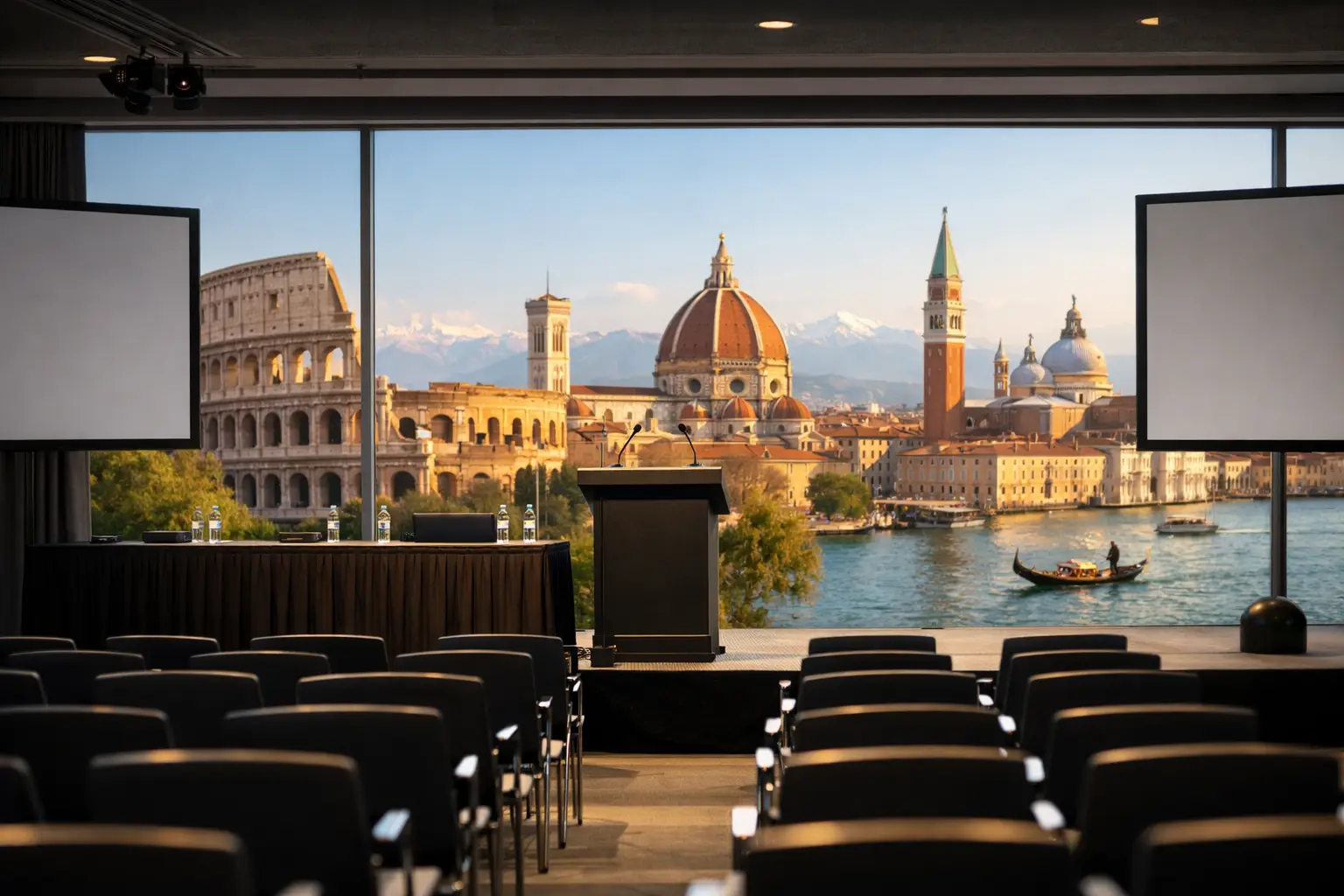
When a congress venue works, attendees remember the content. When it does not, they remember the transfer delays, poor flow, crowded foyers, and rooms that looked far better in the proposal than they did on site. That is why choosing the best Italy venues for congresses is never just about architecture or reputation. It is about matching the right city, access pattern, venue scale, and guest experience to the real demands of your program.
Italy offers an unusually wide range of congress settings. You can place a medical congress in a purpose-built convention center in Milan, host an association assembly in Rome close to institutional landmarks, or frame a leadership conference inside a restored historic complex in Florence or Venice. The opportunity is exceptional, but so is the margin for error. In Italy, venue quality and destination appeal are only part of the equation. Traffic, hotel distribution, coach access, loading restrictions, protected heritage rules, and timing across multiple suppliers all shape the final result.
How to assess the best Italy venues for congresses
For international planners, the right venue is the one that performs well before it impresses visually. Capacity matters, but usable capacity matters more. A venue may advertise a strong plenary number, yet offer limited breakout flexibility, constrained registration space, or difficult exhibition adjacencies. For congresses with sponsors, accreditation desks, interpretation booths, poster sessions, and VIP movement, these details quickly become decisive.
Destination access is the next filter. Milan and Rome absorb large international arrivals more easily than secondary cities, which can reduce transfer complexity and protect attendance. Florence and Venice offer a stronger sense of occasion for many groups, but that appeal comes with logistical conditions. Water transfers in Venice, restricted coach movement in historic centers, and tighter hotel inventory during peak periods can all affect schedule design and budget.
The most reliable venue selections are built around four questions: how people arrive, how they move through the building, where they sleep, and what experience the location adds to the congress itself. Once those answers are clear, the shortlist becomes much stronger.
Milan: Italy’s strongest city for large congress infrastructure
If scale, air access, and operational efficiency are your priorities, Milan is often the most practical answer. It handles major international traffic well, supports substantial room inventory across categories, and offers a business environment that international delegates recognize immediately.
Allianz MiCo
Allianz MiCo is one of the most established answers for large-format congresses in Italy. Its main advantage is not simply size, but flexibility. It can support major plenaries, multiple concurrent sessions, sponsor presence, and high attendee volumes without forcing awkward compromises in circulation.
For medical, pharmaceutical, financial, and association events, MiCo works particularly well because it feels built for serious congress operations. The trade-off is atmosphere. If your brief calls for intimacy or strong local character inside the main congress setting, you may need to create that through off-site dinners, branded design, and city experiences rather than relying on the venue alone.
Superstudio Maxi and other adaptive event spaces
For corporate congresses that sit between conference and brand event, Milan also offers converted industrial and design-led venues. Spaces such as Superstudio Maxi can suit product-led meetings, annual kickoffs, and innovation-focused gatherings where visual identity matters as much as agenda delivery.
These venues can be powerful, but they require more scrutiny. Load-in, breakout acoustics, delegate wayfinding, and temporary infrastructure often need tighter management than in a purpose-built congress center. They are rarely the default choice for highly formal association congresses, but they can be excellent for companies that want flexibility and stronger brand staging.
Rome: prestige, scale, and institutional weight
Rome brings a different value. It adds significance. For congresses tied to policy, healthcare, academia, public affairs, or senior leadership, the city gives the program a level of gravitas that is difficult to replicate elsewhere.
Roma Convention Center La Nuvola
La Nuvola is among the most important modern congress venues in the country. Architecturally, it is distinctive, but its real value is that it accommodates large-scale business events in a capital city with strong international recognition. It suits organizations that need a contemporary setting with room for plenaries, exhibitions, and parallel content tracks.
The main planning consideration is not the building itself, but the city around it. Rome traffic must be treated as a central operational variable, not a side note. Transfer timing, speaker movement, and evening program routing all need realistic scheduling. Handled correctly, La Nuvola gives you major event capability with the prestige of Rome behind it.
Auditorium Parco della Musica
For congresses with a cultural or executive profile, Auditorium Parco della Musica offers a more refined alternative. It is especially effective for conferences that benefit from a strong plenary atmosphere and a setting that feels more curated than convention-led.
This venue works best for mid-sized programs, leadership events, and content-rich conferences where attendee experience matters. It is less suited to very large exhibition-heavy congresses, but for the right format it creates a more memorable tone than many standard conference spaces.
Florence: heritage appeal with tighter operational planning
Florence is rarely chosen because it is easiest. It is chosen because the destination elevates attendance and leaves a lasting impression. For executive congresses, association meetings, and premium corporate gatherings, that can be a compelling advantage.
Firenze Fiera
Firenze Fiera remains the city’s principal congress platform. It offers a combination of conference infrastructure and central positioning that is highly valuable for groups wanting Florence without sacrificing event functionality altogether. Delegates can stay within the historic core, and the city itself becomes part of the attendee journey.
That said, Florence demands precision. Hotel allocation can spread across the center, coach access is limited in some areas, and heritage protections can affect setup and timing. The venue is a strong choice for medium to large congresses, but it performs best when transportation planning and guest communications are exceptionally clear.
Historic palaces for high-level forums
Florence also excels in prestigious historic venues for board-level meetings, institutional forums, and invitation-only congress formats. These settings offer unmatched atmosphere, but they are not interchangeable with full congress centers. Ceiling heights, rigging limitations, restricted load-in, and preservation rules can shape what is possible.
For the right audience, however, the return is substantial. A congress session in a Renaissance setting changes the emotional quality of the event. It signals discernment, not excess, when it is paired with disciplined logistics.
Venice: exceptional impact for selective congress formats
Venice is one of the most rewarding destinations in Italy for congresses, and one of the least forgiving if the format is wrong. It is ideal for high-value audiences, leadership summits, association boards, and premium conferences where the destination itself is part of the strategy.
Venezia Convention Center at San Servolo or Lido-based options
Venice offers several viable congress solutions, including island-based and Lido-based venues that balance meeting functionality with the city’s singular setting. These can work extremely well for contained programs where delegates move within a controlled environment and do not require constant cross-city transfers.
The critical issue in Venice is movement. Water logistics are elegant when they are well planned and highly disruptive when they are not. Arrival windows, weather conditions, luggage handling, and private boat scheduling all affect the attendee experience. For groups willing to respect those realities, Venice delivers a level of distinction few destinations can match.
Other Italian venues worth serious consideration
Bologna deserves attention for congresses that need strong rail access, good value relative to larger capitals, and a well-established trade fair environment. BolognaFiere and the city’s broader business infrastructure can be particularly effective for technical congresses, industry assemblies, and European attendee mixes.
Turin is another strong option, especially for organizations seeking a polished city with lower congestion pressure than Rome or Milan. The Lingotto Congress Center remains relevant for sizeable events and benefits from a destination that feels corporate, elegant, and manageable.
For southern Italy, Naples can be attractive for companies wanting stronger destination emotion and access to landmark experiences, though it requires more careful logistical framing depending on venue choice and guest expectations.
What international planners should prioritize before signing
The strongest venue decision is rarely the one with the most dramatic photography. It is the one that protects your agenda, your delegate satisfaction, and your budget under real operating conditions. That means validating not only room counts and capacities, but also holding areas, branding permissions, technical power, loading times, catering throughput, and realistic transfer schedules.
It also means being honest about event format. A large scientific congress has very different requirements from an executive leadership forum or a branded annual sales meeting. Italy can host all of them at a high level, but not every iconic venue is suitable for every objective.
For many international agencies and corporate teams, local support becomes the deciding advantage at this stage. An experienced Italy partner can challenge assumptions early, identify venue constraints before they become costs, and shape a program around the way the destination actually operates. That is where the shortlist becomes practical, not aspirational.
The best Italy venues for congresses are the ones that make your attendees feel that everything was considered before they arrived – from airport flow to final applause.

