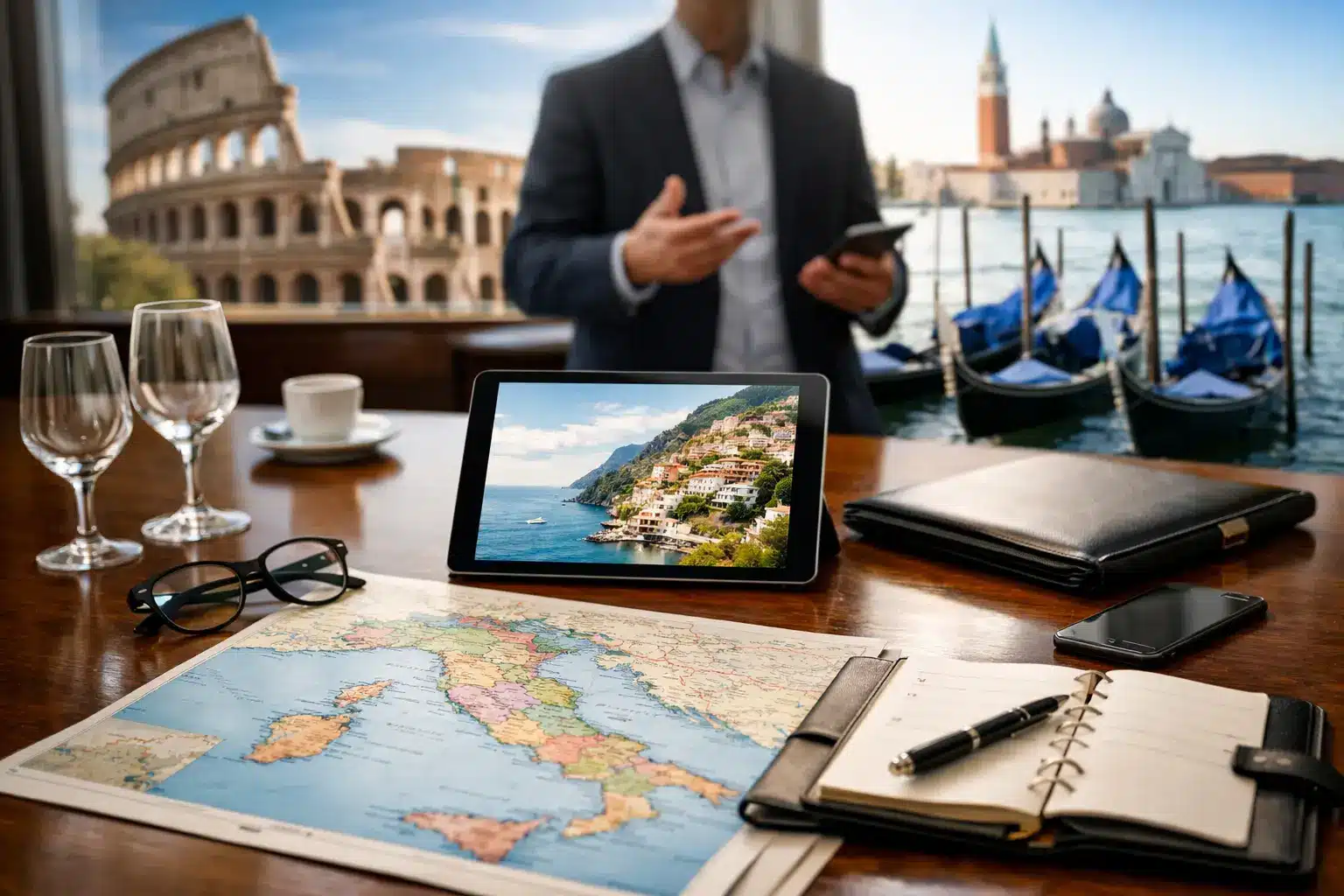
An executive event can lose credibility in the first 20 minutes: a delayed airport transfer, an unclear hotel lobby meeting point, or a keynote room that is not ready when the leadership team arrives. This executive event logistics guide is designed for planners who need Italy to feel effortless to guests because the complex work has been handled well before they land.
For senior audiences, logistics are not a back-office function. They shape the perceived quality of the program, protect limited executive time, and create the conditions for meaningful business conversations. Italy adds exceptional possibilities, from private palazzi and museum settings to landmark hotels and coastal retreats, but each destination brings its own access rules, traffic patterns, supplier considerations, and operational limits.
Start With the Executive Experience, Not the Schedule
A detailed agenda is necessary, but it is not the starting point. First define what the guest experience must achieve. Is the event intended to align global leadership, reward top performers, introduce a strategic direction, or strengthen relationships with clients? The answer determines the right destination, accommodation pattern, transfer model, security posture, and pace.
An executive meeting in Milan may prioritize speed, international air access, and proximity between hotel, meeting space, and dinner venues. A leadership retreat in Florence may benefit from a more considered rhythm, with private cultural access that supports conversation rather than competing with it. Rome can deliver scale and impact, but central access, coach routing, and restricted traffic zones require early planning. Venice creates an extraordinary arrival moment, while water transport demands precise timing and contingency options.
The essential question is not whether a location is impressive. It is whether it supports the business purpose without creating unnecessary friction. A historic venue may be the right choice for an opening dinner, for example, yet not for a full-day conference requiring extensive production, accessible loading, and reliable back-of-house space. The strongest programs pair atmosphere with operational suitability.
Build the Critical Path Before Confirming the Details
Executive event planning works best when dependencies are visible early. Venue access affects production timing. Hotel rooming affects arrival manifests. Flight patterns affect the dinner start time. A late change to the attendee list can affect security credentials, transfers, seating, dietary requirements, and VIP hosting.
Begin with a single operational timeline that covers the program from supplier load-in through final departures. It should identify decision deadlines, not simply event milestones. When must the venue contract be signed? When are final branding files needed? When does the hotel require rooming lists? What is the last practical date to add a private transfer without compromising service standards?
This timeline should be owned by one operational lead and shared in a format that agencies, corporate stakeholders, hotels, transport partners, production teams, and local hosts can follow. Clear ownership matters more than excessive reporting. Every task needs a named decision-maker, a deadline, and an escalation path.
Establish one source of truth
Executive programs often involve several teams: the corporate client, a global agency, regional marketing, travel coordinators, security personnel, and local suppliers. Conflicting versions of the agenda are a common source of avoidable errors.
Maintain one approved document for attendee status, arrivals and departures, room assignments, transport allocations, dietary notes, speaker requirements, and contact details. Separate working files can support specialist teams, but the operational master must remain controlled. Changes should be time-stamped and communicated with discipline, especially in the final 72 hours.
Design Arrival Logistics Around Reality
Airport arrivals are where an Italy program becomes tangible for guests. They should be planned around actual flight waves, luggage collection times, airport regulations, and the distance to the hotel, not only the scheduled landing time.
For an executive group, the appropriate transfer model depends on the profile and size of the audience. Individual chauffeured cars offer privacy and flexibility for board members or high-profile speakers. Hosted shared transfers can be more efficient for a compact arrival window. Coaches are appropriate for larger groups, but only when hotel access, luggage handling, and guest flow have been checked in advance.
In cities with busy historic centers, the final stage of a transfer deserves particular attention. A vehicle may not be able to stop directly outside a venue or hotel. In Venice, guests may need a water-taxi route and porters; in Rome or Florence, the final approach may require a short guided walk. These details are not inconveniences when they are anticipated and hosted well. They become frustrations when they are discovered at the curb.
Arrival hosts should have live flight visibility, clear signage, direct communication with drivers, and authority to make quick decisions. The goal is not to follow a rigid plan when conditions change. It is to keep each guest informed, welcomed, and moving with confidence.
Choose Venues With Access, Production, and Privacy in Mind
Italy’s historic venues create powerful brand moments, but heritage buildings require a practical assessment beyond their visual appeal. Ask how equipment enters the building, where technical teams can work, whether guest elevators are available, how many restrooms are accessible, and what noise restrictions apply. A room that holds 200 at dinner may not hold 200 comfortably for a conference setup with staging, cameras, interpretation, and sightlines.
Privacy is equally significant for executive audiences. Confirm whether the space is exclusive, how public access is controlled, and whether other events are taking place nearby. For confidential leadership sessions, consider separate arrival routes, discreet security positions, and meeting rooms that are genuinely insulated from hotel traffic.
Production planning should begin as soon as the venue is shortlisted. Site inspections with the right technical and operational partners reveal constraints that floor plans cannot show: narrow doors, protected frescoes, limited power, curfews, or a loading route that requires staged deliveries. These limitations do not rule out distinctive venues. They simply inform the right creative and technical approach.
Protect Time During the Live Program
Senior attendees notice waiting. They notice when registration lines form, when a session restarts late after a break, and when transportation sits outside without a clear boarding call. Time protection is therefore one of the most valuable services an event operation can provide.
Build realistic transition windows into the agenda. A five-minute walk can become 15 minutes when 120 guests leave a meeting room, collect coats, use restrooms, and move through a heritage property. Dinner transfers need time for boarding, traffic, and arrival security. A program that appears efficient on paper can feel rushed in person if these human factors are ignored.
A discreet command structure is the answer. The event director, transport lead, venue manager, production manager, and client lead should be able to communicate instantly and make informed adjustments. Guests should see calm hosts, clear directions, and a program that progresses naturally. They do not need to see the operational decisions taking place behind the scenes.
Plan contingencies that preserve the experience
Contingency planning is not about assuming failure. It is about giving the team options before options become urgent. Weather alternatives are essential for terraces, gardens, rooftops, and water-based programs. Backup transport capacity matters when flight delays affect group movements. Alternative access routes can protect an agenda when city traffic, demonstrations, or local restrictions intervene.
The best contingency is often an experience of equal quality, not a reduced version of the original. If an outdoor aperitivo must move indoors, the interior space should already be styled, staffed, and ready to receive guests. If a keynote speaker is delayed, the agenda needs a credible content adjustment rather than a room full of waiting attendees.
Treat Security, Privacy, and Hospitality as One Operation
Executive events may require visible security, discreet security, or no formal security presence beyond standard venue protocols. It depends on attendee profile, subject matter, location, and corporate policy. What should not vary is the integration between security planning and guest hospitality.
Security teams need accurate manifests, arrival schedules, venue plans, credential procedures, emergency contacts, and knowledge of VIP movements. Hospitality teams need to understand access rules and escalation procedures without making guests feel managed. When these functions work separately, arrivals can feel cold and guest service can become inconsistent. When they work together, the environment feels welcoming and controlled.
Data handling deserves the same discipline. Attendee information, flight details, passport data, and dietary records should be collected only when necessary, shared only with authorized partners, and managed through clear processes. For international planners, local support is particularly valuable here because supplier practices, venue protocols, and city regulations can vary considerably.
Use Local Knowledge to Create Meaningful Precision
A polished Italian program is not defined by adding more activity. It is defined by selecting the right moments and delivering them with authority. A private museum opening, a dinner in a restored palazzo, or a chef-led evening can support an executive agenda when it is paced correctly, accessible for the group, and aligned with the brand’s purpose.
This is where an experienced destination partner changes the equation. Love IT DMC coordinates local suppliers, venue requirements, transport movements, and guest-facing details as one connected operation. The result is not simply an attractive itinerary, but a program in which Italy’s cultural depth reinforces the business objective.
For planners, the practical standard is clear: every guest should know where to be, feel expected at every point, and have enough space to focus on the reason they came. When that standard is met, the destination does more than impress. It gives the leadership conversation the setting, rhythm, and confidence it deserves.

